
Last updated October 16, 2026
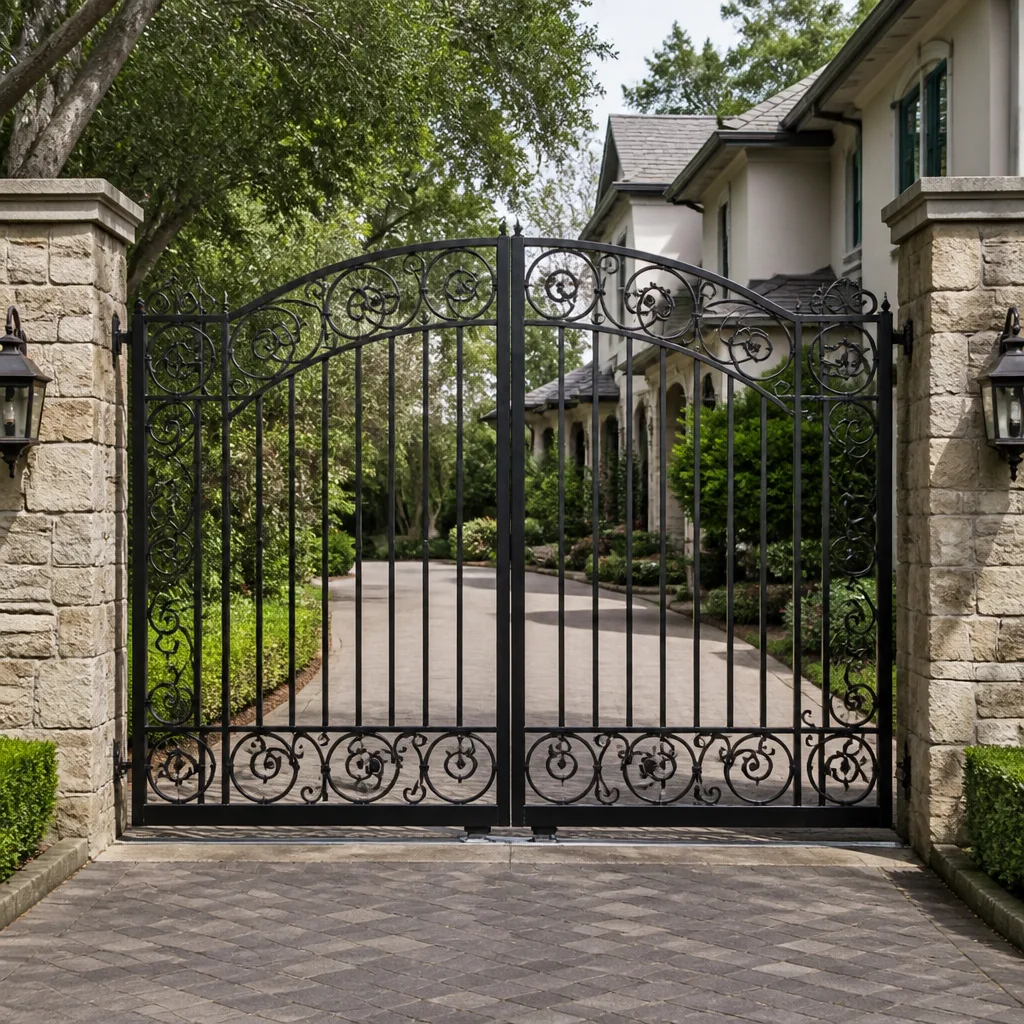 Wrought iron
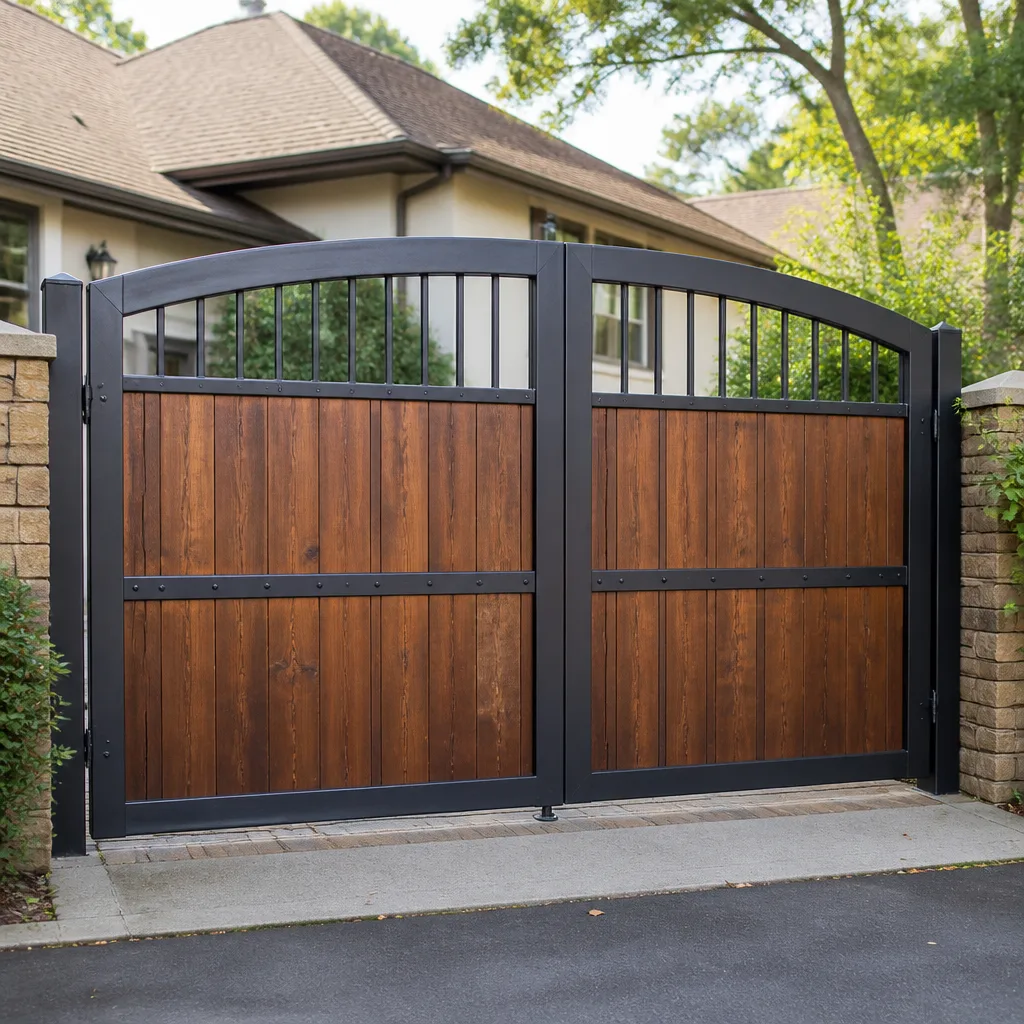 Wood & steel frame
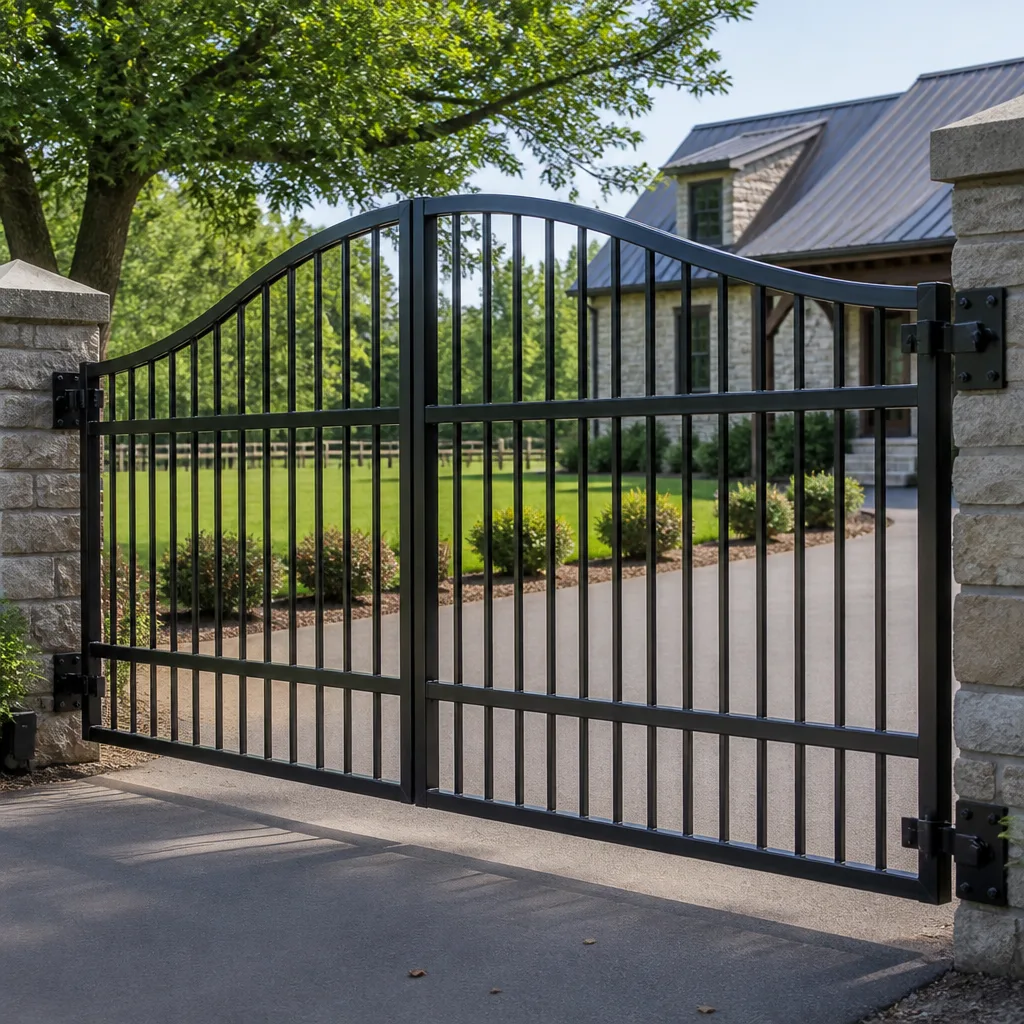 Farm & ranch
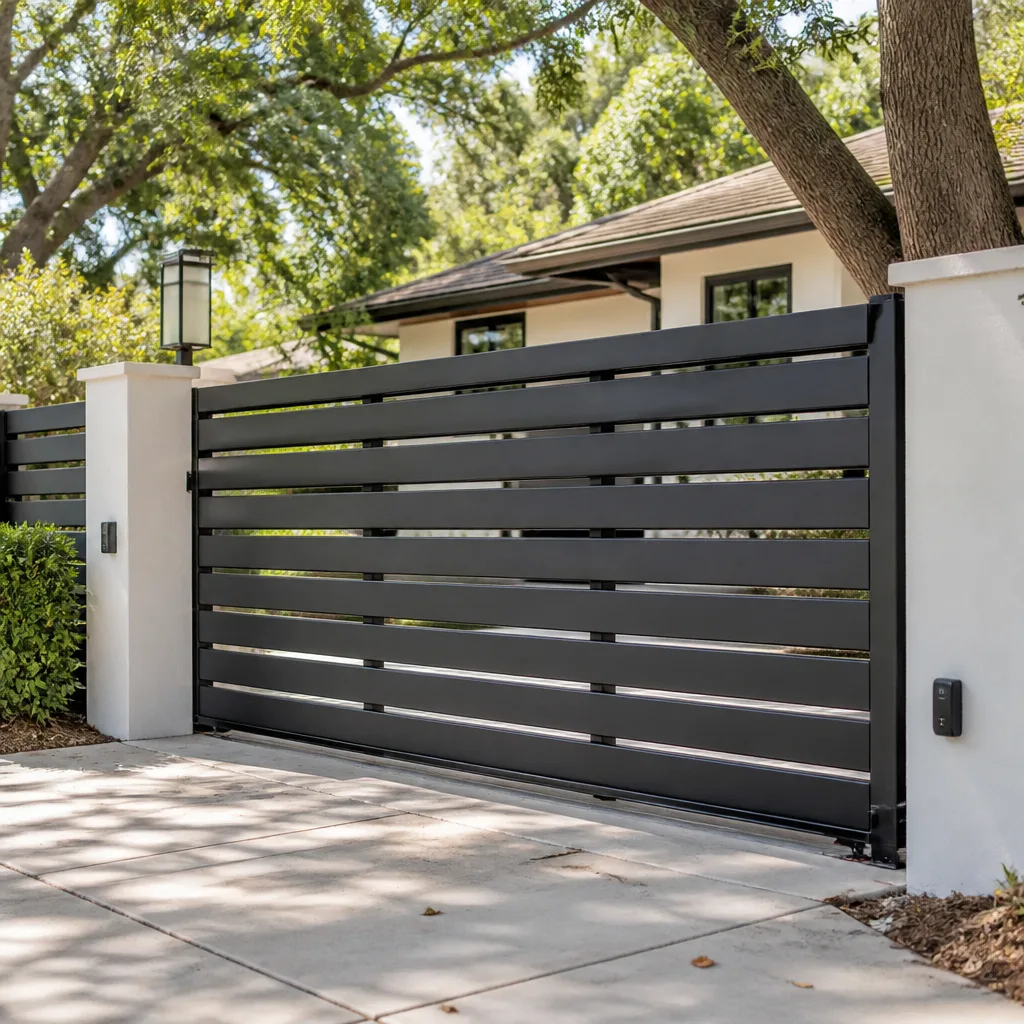 Sliding driveway gates
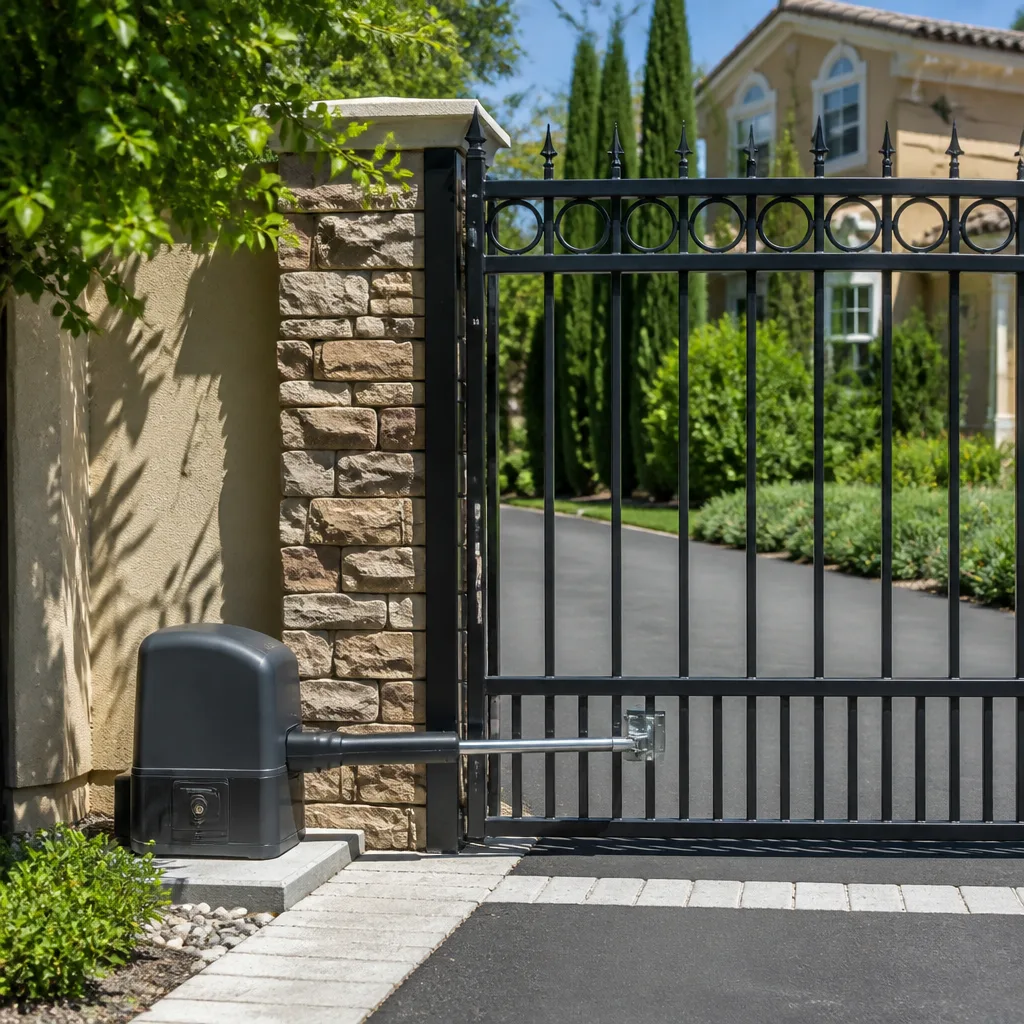 LiftMaster operators
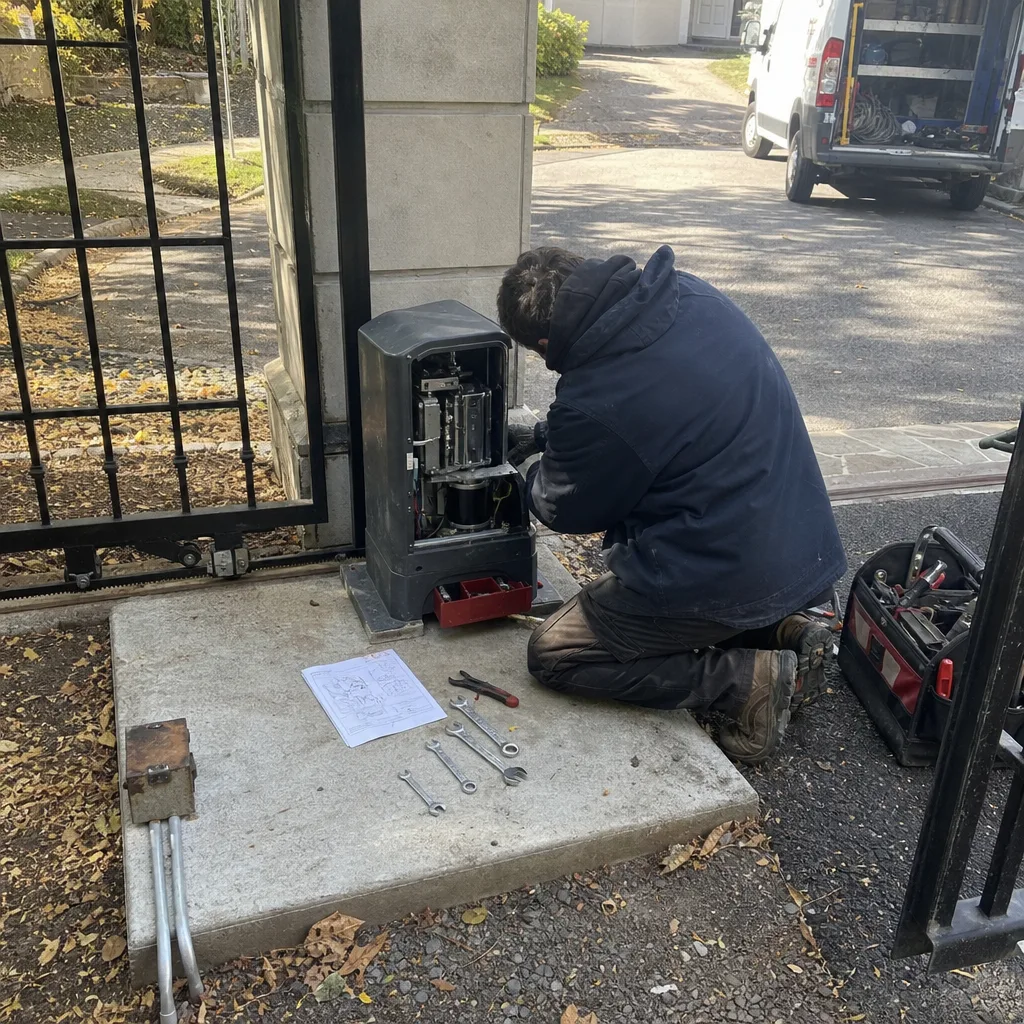
Free on-site gate assessment - hinges, posts, and your LiftMaster or Nice gate operator checked before anything is quoted
The assessment is free and the quote is the invoice.
Get your free estimateThe Complete Guide to Gate Repair in New York
Most New Yorkers call a gate company on the worst possible day: the morning the gate won’t open, a delivery truck is blocking the street, and the car is trapped in the driveway. By then, the problem has usually been developing for months. A sliding gate that started grinding in January will often drop off its bottom roller by March. The catch is that gate failures in New York follow patterns that are entirely predictable by gate type and neighborhood, and once you know which failure is coming, you can fix a $200 problem before it becomes a $1,800 problem. This guide maps those patterns so you can read your own gate before calling anyone.
Quick Answer
Gate repair in New York typically costs between $175 and $1,800 depending on whether you’re fixing a hinge, replacing a roller, or swapping out a gate operator. The most important rule: any contractor who won’t give you a written price before touching the gate is a red flag. You can handle basic diagnosis yourself by knowing the three failure stages and which symptoms match your gate type, but the actual repair is safest in the hands of a professional with written-guarantee backing.
Key Takeaways
• New York gates fail in predictable, preventable patterns tied to borough, gate type, and climate.
• Early-stage grinding, sagging, or hesitation costs far less than full failure: $120 – $300 vs. $1,200 – $2,800.
• Freeze-thaw cycles, street salt, and subway vibration accelerate specific hardware failures in New York that you won’t see in other markets.
• A written price before work starts, and a written 365-day guarantee, are the two non-negotiables in selecting a gate repair provider.
Styles & brands we work with
Table of Contents
- The Four Gate Types You’ll Actually See in New York
- The Three Failure Stages Every Gate Goes Through
- Realignment, Hinge Replacement, and Panel Replacement: What They Actually Mean
- How New York’s Freeze-Thaw Cycles, Street Salt, and Subway Vibration Ruin Gates Faster
- What Fair Prices Look Like for the Five Most Common Gate Repairs
- The Written-Price Rule: Why It’s the First Thing to Check
- A Simple Seasonal Gate Maintenance Routine That Prevents Most Failures
- When a Gate Problem Is Actually an Emergency
The Four Gate Types You’ll Actually See in New York
Before you can diagnose a gate problem, you need to know which kind of gate you have, because each type fails in its own predictable way. In New York, the housing stock and lot sizes drive gate choices, and the contrasts from one borough to the next are sharper than in almost any other U.S. city.
Wrought iron swing gates in Brooklyn brownstones. These are the classic garden-level and front-yard gates on Park Slope, Carroll Gardens, Bed-Stuy, and Ditmas Park. They’re usually double-leaf swing gates with surface-mounted hinges bolted to masonry or steel posts. The iron itself is durable; the weak points are the hinge bolts pulling out of aged brick and the lower corners of the panels resting against the sidewalk. Brooklyn’s older sidewalks heave with tree roots, which slowly changes the angle of the gate until the latch no longer lines up.
Aluminum swing gates in Queens driveways. Queens has more driveway parking than the rest of the boroughs combined, and most of those driveways use lightweight aluminum single-leaf swing gates. These are common from Astoria to Bayside to Howard Beach. Aluminum doesn’t rust, but it does flex. The welding points at the top and bottom rails, and the actuator mounting bracket, are the first things to crack. In neighborhoods near the water, like the Rockaways, salt spray accelerates corrosion on the steel hardware even when the aluminum panel looks fine.
Steel sliding gates in Bronx commercial lots. The Bronx has the highest concentration of steel sliding gates in New York, most of them on commercial properties, warehouses, and auto body shops along Bruckner Boulevard and Hunts Point. These gates ride on a bottom track with steel wheels and rollers. They fail from debris buildup in the track, especially in winter when salt and sand get kicked into the rail. A commercial sliding gate that drags or hops while moving is usually a roller that’s already ovaling out.
Decorative wrought iron estate gates in Manhattan and Staten Island. Manhattan’s private outdoor gates are rarer, but the ones that exist are usually high-end wrought iron on Upper East Side townhouses or decorative gates around landmarked buildings. Staten Island, by contrast, has the most estate-style gates in any borough, many of them swing gates on long driveways in Todt Hill, Emerson Hill, and Great Kills. On Staten Island, the failure pattern is usually motorized operator burnout because the gates are wide and heavy, and the operators are undersized for the load.
If you’re not sure what type you have, or want a professional eye on it before the next season starts, our full gate repair guide for New York covers the diagnosis process in detail.
The Three Failure Stages Every Gate Goes Through
Every gate failure in New York moves through three clear stages, and the goal is to catch it at stage one. Here’s what each stage looks like for a swing gate and a sliding gate respectively.
Stage 1: Early warning. For a swing gate, this is a faint squeak when opening, a latch that requires lifting the gate an inch to catch, or a panel that sits visibly lower on one side. For a sliding gate, early warning is a low grinding sound when moving, a slight wobble in the middle of the panel, or the operator sounding strained on startup. Stage 1 repairs cost $120 – $300 in most New York neighborhoods: tightening hardware, greasing the wheels, or replacing a single worn roller before it chews up the rail.
Stage 2: Functional degradation. The gate still works, day to day, but something is observably wrong. A swing gate drags against the ground on one side, or the automated opener starts and stops mid-cycle. A sliding gate grinds loudly enough that you hear it from inside the house, or it jumps the track rail every few cycles. Stage 2 is where most New Yorkers finally call, because the noise becomes impossible to ignore. By then, the repair is usually $400 – $900, because the failed part has now damaged its neighbor: a seized wheel has scored the track, a bad hinge has pulled the frame out of square.
Stage 3: Full failure. The gate won’t budge. The panel is resting on the ground, the chain has snapped off a sprocket, or the operator hums but nothing moves. A stage 3 repair often means replacing the bottom roller assembly or the full operator, realigning the entire panel, and sometimes welding cracked frame members. Stage 3 repairs in New York commonly run $1,200 – $2,800, and on a wide commercial gate, sometimes more.
- Listen once a month. If the gate sounds different than it did last month, that’s stage 1.
- Look at the gap between the gate and the post when closed. If it’s wider at the top than the bottom, or vice versa, the hinges are wearing.
- Watch a full open-and-close cycle. Any hesitation, reversing, or stutter in the motor is a stage 2 signal.
- Don’t wait until it won’t open. The most expensive gate repair in New York is the one that’s been ignored for six months.
Dean Prescott, who owns our New York location, likes to put it simply: a gate never fails without warning, it just fails without being watched.
Realignment, Hinge Replacement, and Panel Replacement: What They Actually Mean
When a gate contractor in New York hands you an estimate, you’ll usually see one of three common repair descriptions. Here’s the plain-English translation so you know exactly what you’re paying for.
Realignment. The gate panel has drifted out of square, or a sliding gate’s wheels no longer sit level on the rail. Realignment means adjusting the hinges, shimming the post, or leveling the track so the gate sits and moves the way it did when it was installed. A realignment is usually $175 – $400 in New York and takes under two hours. It’s the cheapest repair that actually fixes the problem, because most failing gates fail from drift, not breakage. If a contractor says your gate needs realignment but won’t explain what’s out of line, ask for a photo of the measurement.
Hinge replacement. Hinges wear into an oval shape over time, or their bolts pull out of aging brick and concrete. Replacing a hinge is not just swapping the metal plate; it includes re-drilling the mounting holes, using proper anchors for the material (masonry vs. steel post), and re-aligning the gate afterward. Hinge replacement in New York typically runs $250 – $600 per hinge depending on the gate weight, with double-leaf gates often needing both sides done at once.
Panel replacement. This is the big one. When a gate panel has rusted through at the bottom rail, bent from a minor collision, or cracked at the welds, patching only buys a year or two. Full panel replacement means fabricating or ordering a new panel, removing the old one, hanging the new one, and re-fitting all hardware. On a New York driveway gate, a replacement panel typically runs $900 – $2,200, and on a decorative wrought-iron panel from a historic Brooklyn brownstone, the cost can be higher because the fabrication has to match the original design.
How New York’s Freeze-Thaw Cycles, Street Salt, and Subway Vibration Ruin Gates Faster
New York is one of the hardest climates in the country on gate hardware, and most imported gate designs weren’t built for it. Three local factors do the damage.
Freeze-thaw cycles. A New York winter doesn’t stay frozen; it cycles above and below 32°F dozens of times from December through March. Each cycle lets water seep into hinge pins, bearing races, and track bolt holes, then freeze and expand. Over a season, this microscopic expansion loosens bolts and cracks concrete footings. It’s why gates in New York need their hardware re-torqued every spring, even if they were installed perfectly.
Street salt runoff. Salt from New York’s streets and sidewalks ends up on the bottom rail and track of every gate near the curb. Salt draws moisture and accelerates rust on steel components, especially the lower rollers on sliding gates and the bottom hinge pins on swing gates. A sliding gate in the Bronx that gets salted track all winter can rust out its wheel bearings in two seasons. The fix is a seasonal rinse and a re-grease of the bearing surfaces, ideally before the first heavy snow.
Subway vibration. In neighborhoods along New York’s elevated lines and subway routes, constant low-frequency vibration loosens gate hardware prematurely. Hinge bolts, track screws, and actuator mounting bolts all back out slowly over months. It’s why some gates in Astoria and Long Island City need re-tightening twice a year, while the same hardware in a quiet part of Staten Island stays snug for five.
For a deeper look at the mechanical side, including operators that get destroyed by these same forces, see our electric gate repair guide for New York.
What Fair Prices Look Like for the Five Most Common Gate Repairs
These are real price ranges for the New York market, reflecting what we quote and what we see from other competent local companies. If a number comes in dramatically below these, the contractor is either underinsured or planning to inflate the invoice on-site. If it’s dramatically above, get a second opinion.
| Repair | Typical New York Price Range | What It Includes |
|---|---|---|
| Hinge replacement (per hinge) | $250 – $600 | New hinge, proper anchors, re-alignment |
| Sliding gate roller replacement | $180 – $450 | New wheels/bearings, track cleaning, leveling |
| Swing gate actuator (operator) replacement | $700 – $1,400 | New actuator, mounting hardware, limit setup |
| Track realignment | $175 – $400 | Re-level track, re-torque rail bolts, test cycle |
| Full panel replacement | $900 – $2,200 | New panel, removal of old, full re-fit |
Every one of these prices should be quoted in writing, before any work starts. At our Portcullis Gate Repair New York location, part of the Kingswell group of companies, that’s a non-negotiable: the number is on the estimate, and the estimate is what you pay, not a starting point.
The Written-Price Rule: Why It’s the First Thing to Check
The single biggest tell of how a New York gate company operates is whether they’ll put a price in writing before touching the gate. Not a verbal ballpark. Not a “we’ll see once we open it up.” A written price for the job as scoped.
Here’s why it matters. A gate is a heavy, awkward piece of machinery. Once a technician has unbolted the operator or pulled the gate off its rail, the homeowner is in a weak position to argue about cost. The unscrupulous contractor knows this, and that’s the moment the “unexpected” charge appears. The extra $400 for a “worn receiver board” or the “we should really replace both hinges while we’re in there” upcharge. It’s the oldest pattern in the gate trade, and New York homeowners experience it every week.
The Kingswell Guarantee, which every gate repair in New York from our shop carries, requires the price to be stated in writing before any work. It also requires a real arrival window, a clean job site, and a written guarantee on the repair itself. Those four commitments apply to every Kingswell company, including our independently owned New York location, and they’re spelled out on the estimate, not in the fine print.
A Simple Seasonal Gate Maintenance Routine That Prevents Most Failures
If you do nothing else from this guide, do these four things, once in the fall and once in the spring. They cost almost nothing and prevent most of the stage 3 failures we respond to in New York.
- Rinse the bottom rail and track. Use a hose, not a pressure washer. Get the salt and grit out of the roller path. On a sliding gate, clean the entire track from end to end.
- Check every visible bolt and screw. Especially on hinge plates, track brackets, and actuator mounts. A snug bolt takes 30 seconds; a sheared bolt on a January morning is a full repair call.
- Lubricate the hinge pins, rollers, and chain. Use a dry lubricant on moving metal parts, never WD-40, which washes out grease and leaves bare metal.
- Run the gate through a full cycle and listen. Any new sound, any hesitation, any new scraping is your cue to call before the next stage.
For gate operators, the maintenance is a bit more involved: testing the safety edges, checking the force settings, and inspecting the control board for moisture. If you’ve got an automated gate and haven’t had the operator serviced in a couple of years, that’s the next call to make.
When a Gate Problem Is Actually an Emergency
Most gate repairs can wait a day or two without consequence. A handful cannot. Here’s how to tell the difference.
Call immediately if: the gate won’t close and the property includes a pool, a dog, or a child under five. Or the gate has fallen partially off its track and is leaning into the driveway, creating a hazard for anyone pulling in. Or the gate operator is making a loud grinding noise while someone is near the gate, which can indicate a failing gear that could release suddenly. In commercial settings, a gate stuck open overnight in the Bronx or Brooklyn is an open invitation; call right away.
Can wait a day or two: a latch that’s stubborn but still functions, a gate that’s noisy but moving, a sag that’s visible but not touching the ground, a remote control that works intermittently. These are stage 1 or stage 2 problems that should be addressed quickly but aren’t immediate hazards.
In either case, don’t put your hands near a gate that’s under tension from a failed spring or a bound sliding gate. That’s a serious injury risk, and not a DIY moment. Call a pro instead.
Common Mistakes to Avoid
- Hiring the first company that answers the phone. New York is a big market, and the cheapest bid is usually cheap for a reason. Ask about written pricing and warranty before you book.
- Ignoring a gate that now needs a shoulder to open. Every time you force a sagging gate, you bend the hinges a little more. A $180 realignment becomes a $500 hinge job.
- Letting a sliding gate grind through a whole winter. Salt and grit are working their way into the bearings. By spring, the track itself is scored and needs service.
- Lubricating with the wrong product. WD-40 and other penetrants strip the existing grease. Use a dry lube designed for gate hardware.
- Accepting a verbal quote. If a contractor won’t write the price down, you already know how the invoice is going to end.
- Doing a full operator replacement when the problem is a failing capacitor. A good tech checks the cheap parts first. Ask what the actual failed component is.
See the difference
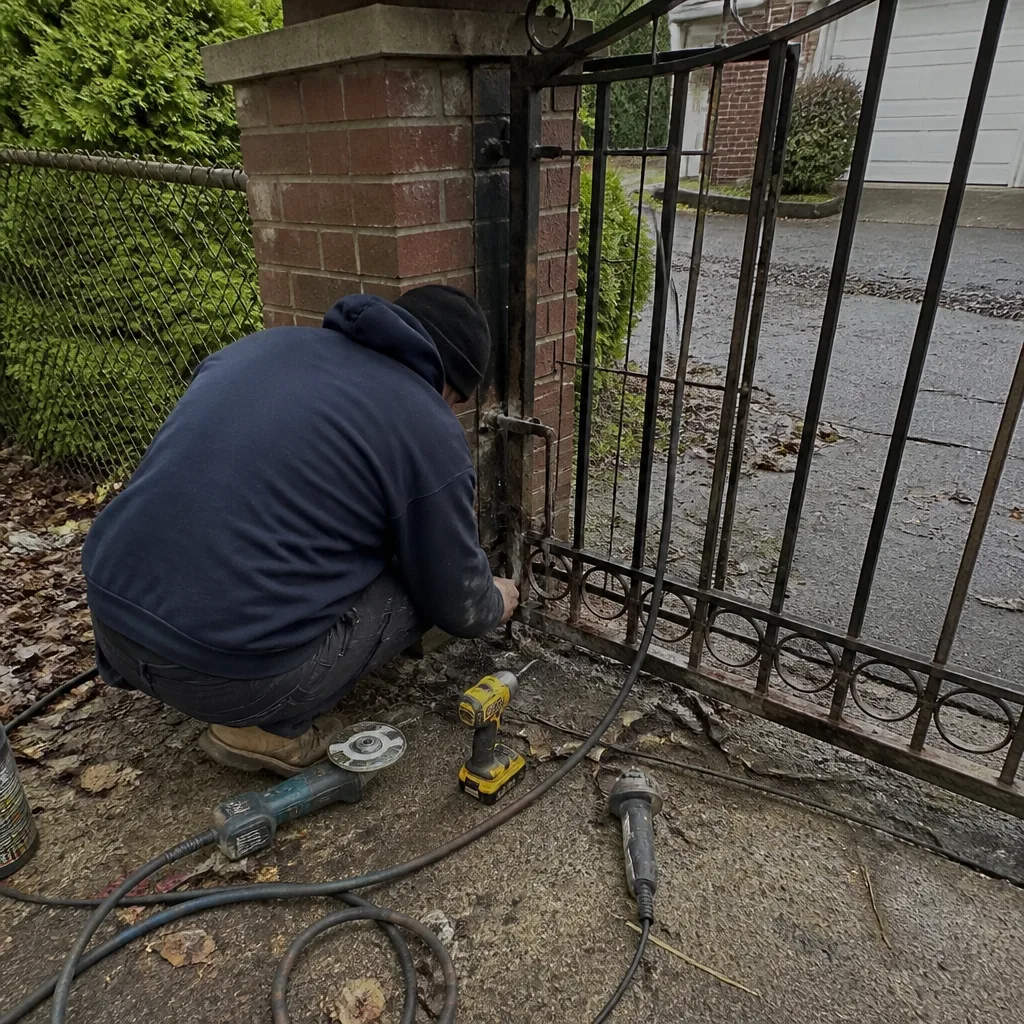 Before
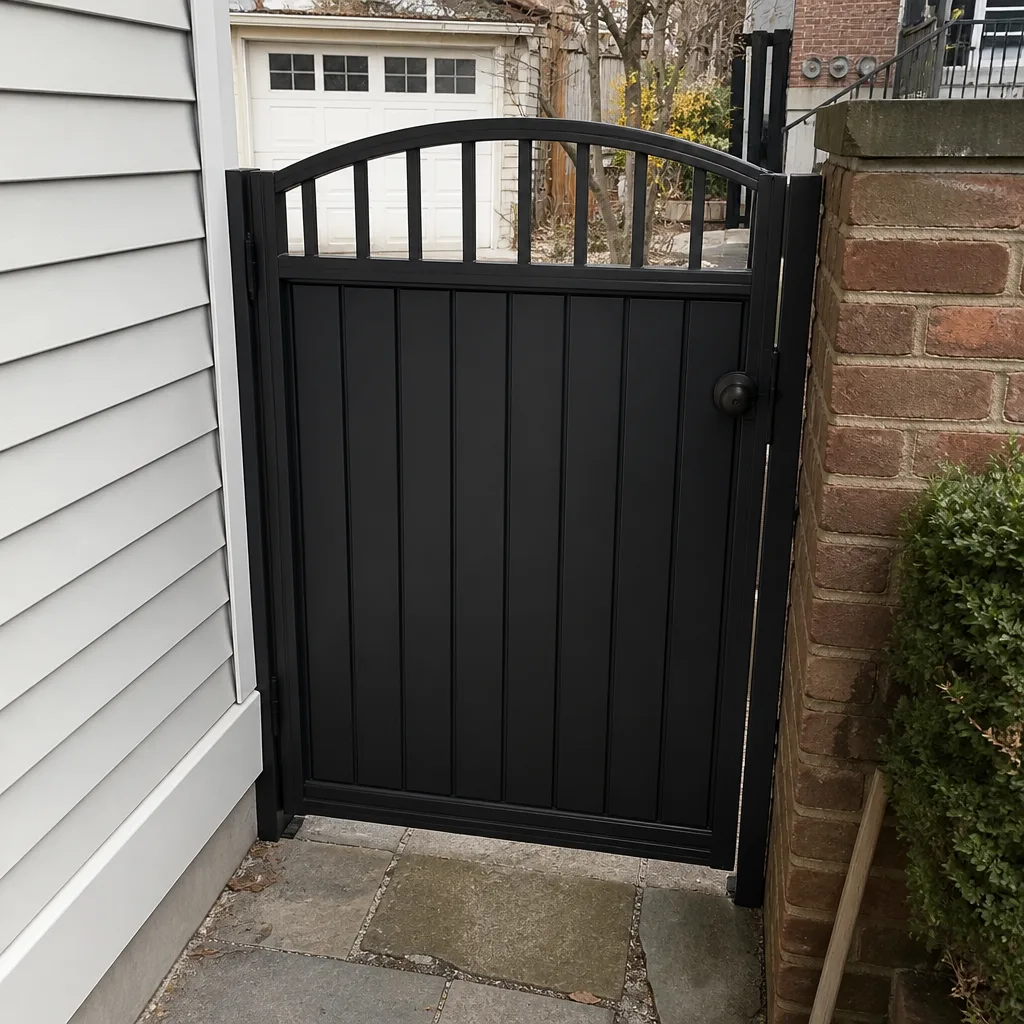 After
After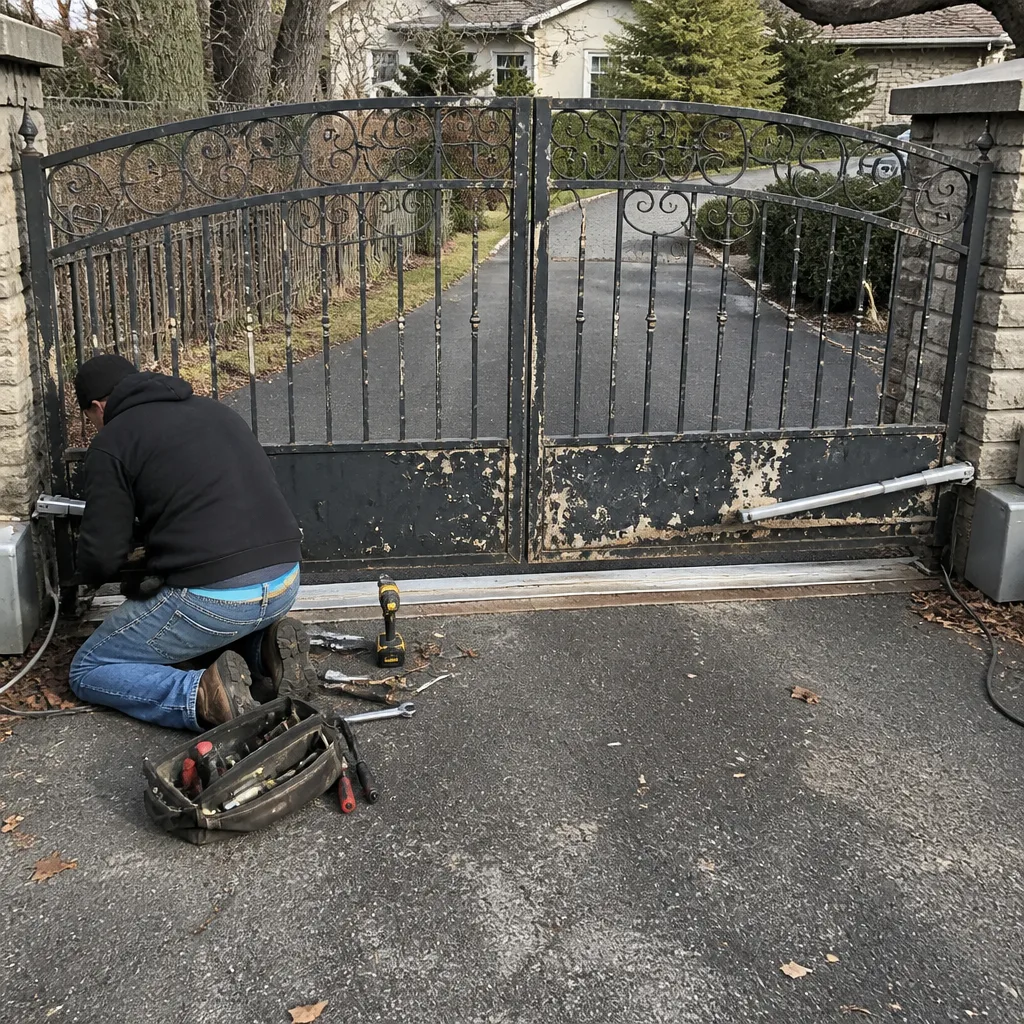 Before
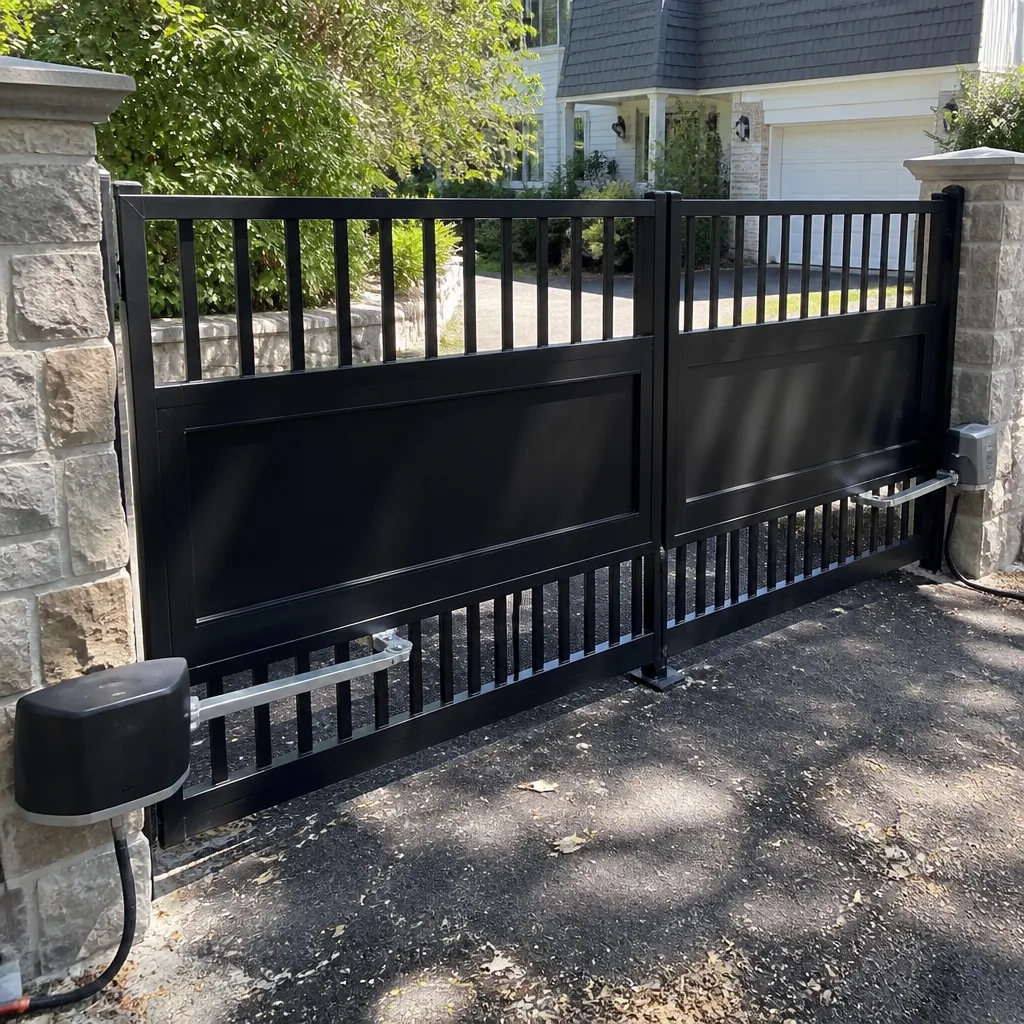 After
After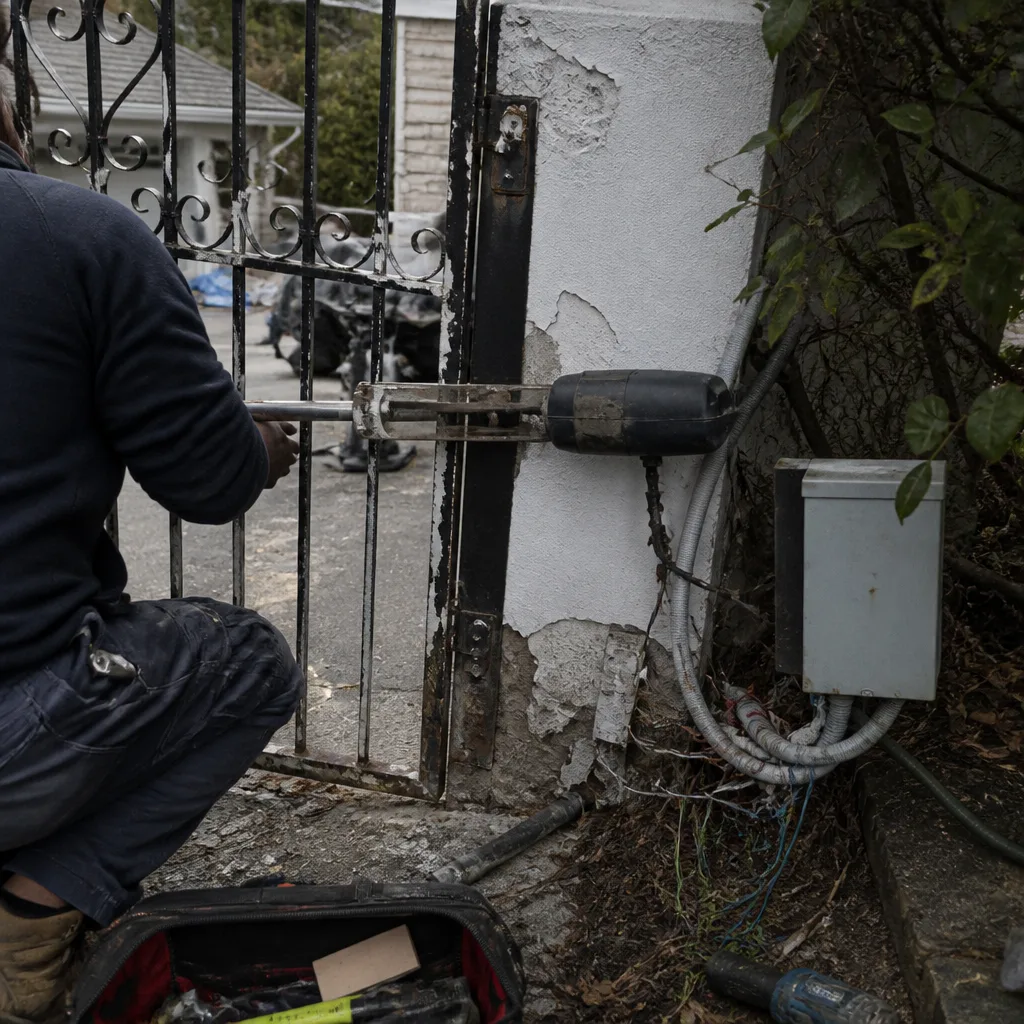 Before
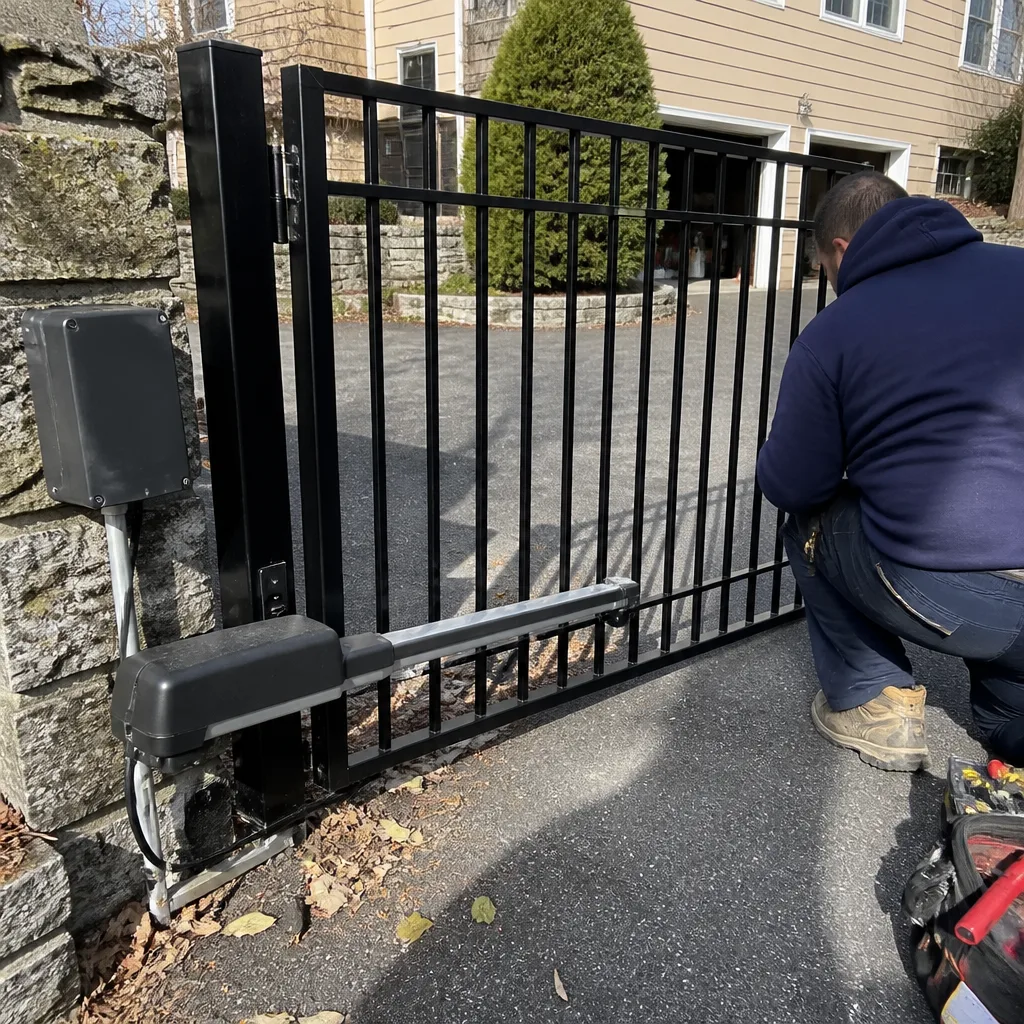 After
AfterWhen to Call a Professional
If your gate is through stage 1 and into stage 2 (the noise, the drag, the hesitation), the window for cheap fixes is closing. Call a professional who offers the written price and the written guarantee, not a verbal estimate and a promise. In New York, we answer the phone around the clock with a live person, because a gate that won’t close at 10 p.m. is a problem now, not tomorrow. If the repair bills are approaching the cost of a replacement, talk to a gate installation pro about your New York-specific options too. Portcullis Gate Repair New York offers free estimates throughout the city, including same-week appointments in most boroughs. Call (845) 259-0242 for a free estimate and a written price before any work starts. If you need an entirely new gate rather than a repair, see our gate installation guide for New York homeowners.
Frequently Asked Questions
Gate repair in New York typically costs $175 to $2,800, with most common repairs like hinge work and roller replacement landing in the $180 to $600 range. The single biggest factor is how long the problem has been developing. A stage 1 fix is a couple hundred dollars; a full panel or operator replacement after months of ignored grinding is a couple thousand. Call (845) 259-0242 for an exact quote after our technician sees your gate; estimates are free and written.
New York gates fail more often because of the freeze-thaw cycle, street salt runoff, and subway or traffic vibration. These factors loosen hardware, corrode rollers, and crack footings over time, even when the gate itself is well-built. Seasonal maintenance can offset most of it.
In most cases, yes, for standard repairs like hinge replacement, roller swaps, and track realignment. Same-day scheduling depends on parts and location within New York, but our technicians carry the most common hardware on the truck. Emergency calls are answered live 24 hours a day.
Our 365-Day Done Right Promise guarantees the repair for a full year, in writing, on every invoice. If the same repair fails inside that year, we return and fix it at no charge. That’s the Kingswell Guarantee, and it applies to every independently owned location that operates as a Kingswell company.
Yes. We service residential and commercial gates across Manhattan, Brooklyn, Queens, the Bronx, and Staten Island. Our New York location dispatches from a central hub and answers calls around the clock.
If your operator is from Linear, Viking, Ghost Controls, DoorKing, LiftMaster, FAAC, BFT, Elite, or Mighty Mule, our technicians are factory-trained on it. We don’t just show up with a generic opener and hope for the best; we service the specific system on your property.
The Bottom Line
Gates in New York fail in patterns, and the most expensive repair is always the one that could have been caught six months earlier. Watch for the three stages, take the seasonal maintenance seriously, and never let anyone touch your gate without a written price first. When you’re ready for a professional second opinion, or the repair itself, call (845) 259-0242. We’ll give you a straight answer, a written quote, and the Kingswell Guarantee on every repair. That means 365 days of coverage, in writing, from an independently owned New York company that’s been fixing gates since 2008.
Written by Dean Prescott, Owner at Portcullis Gate Repair New York, serving New York since 2008.