
Last updated October 16, 2026
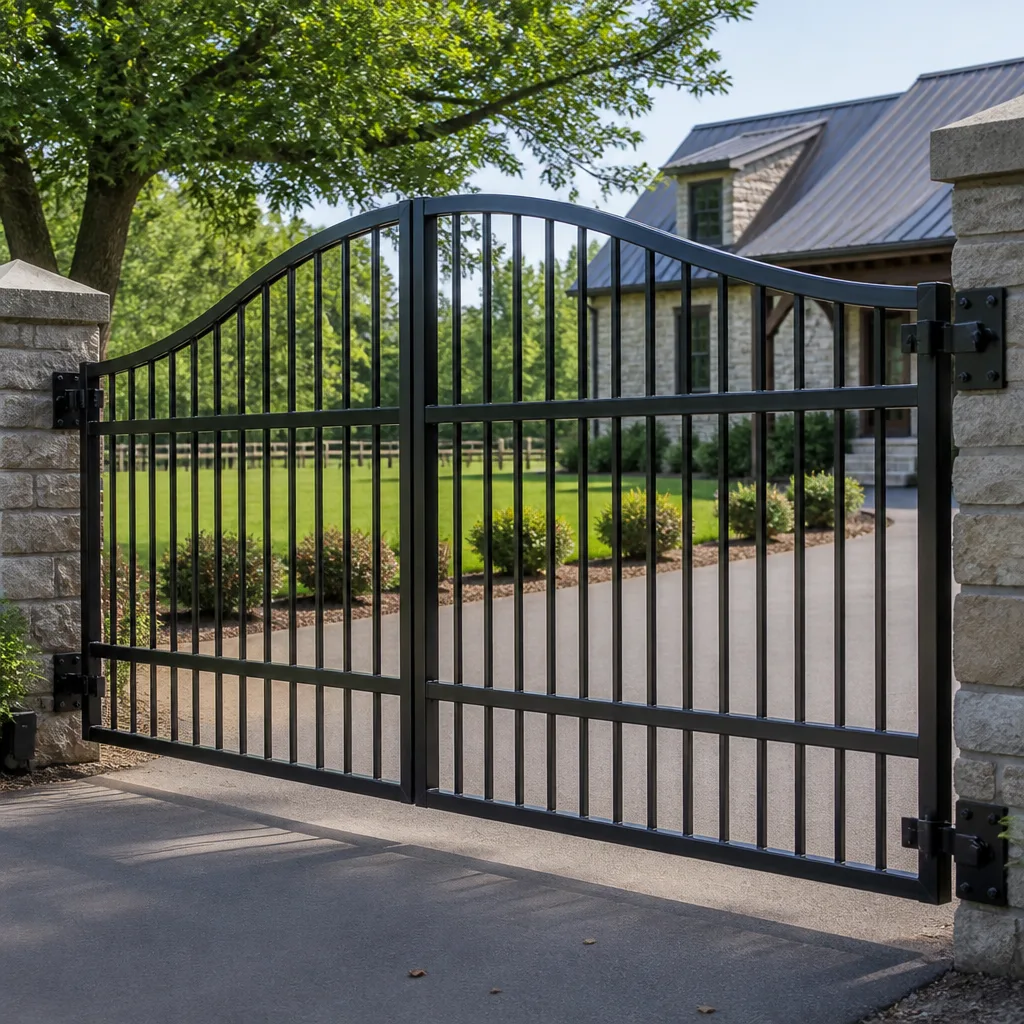
 Wrought iron
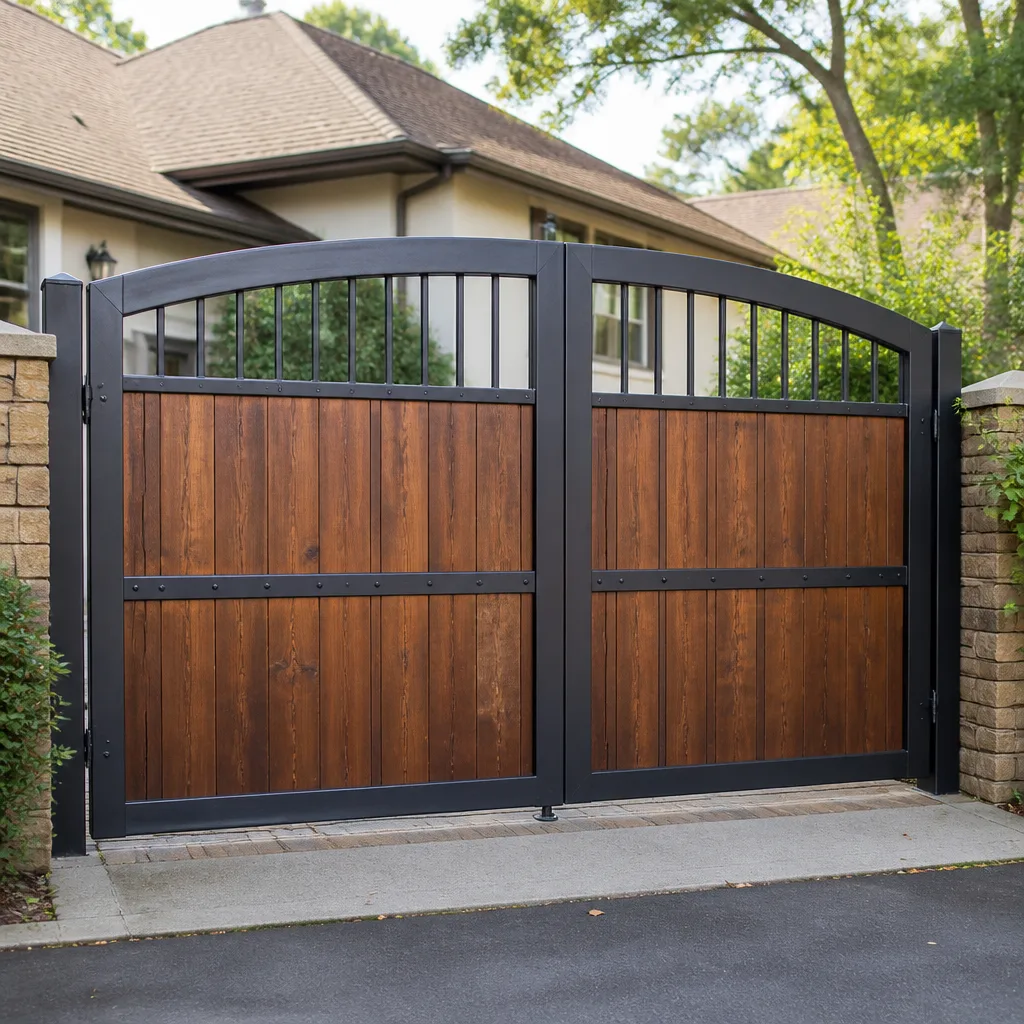 Wood & steel frame
 Farm & ranch
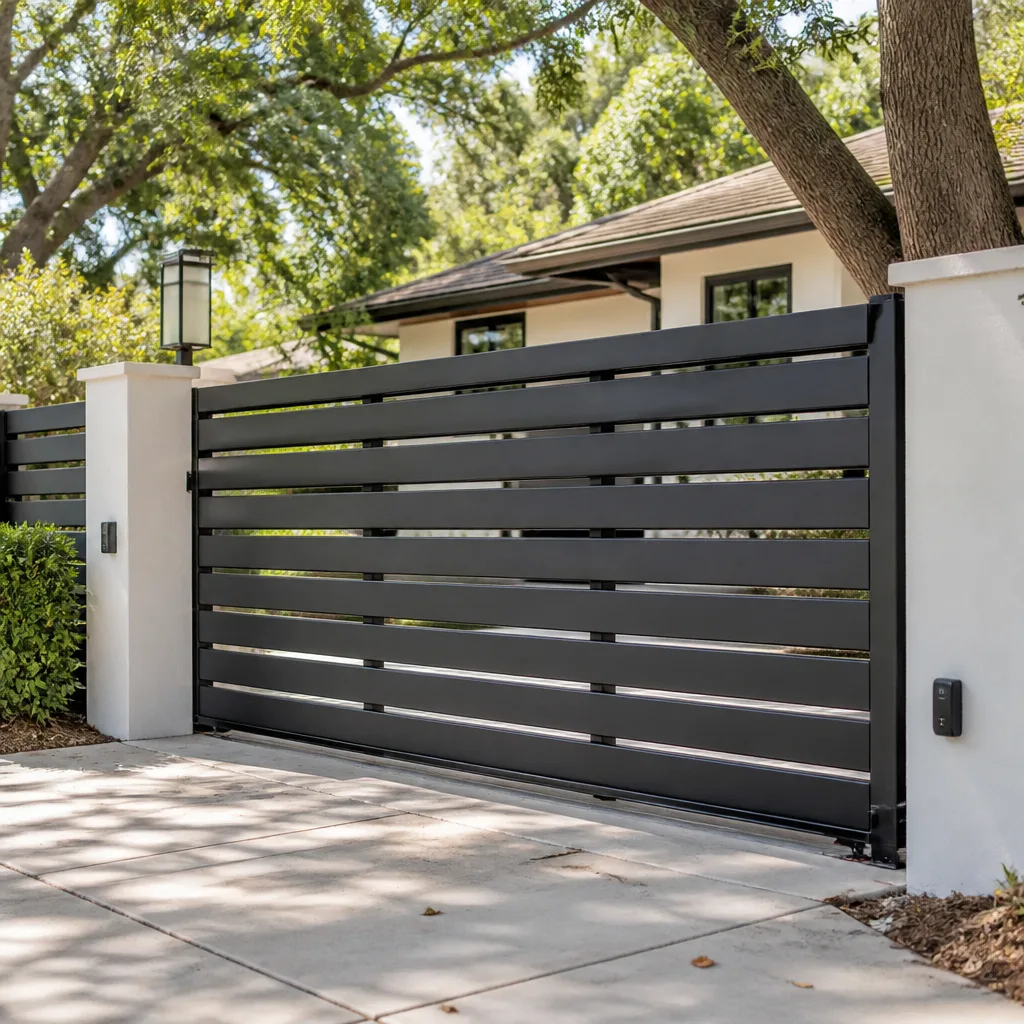 Sliding driveway gates
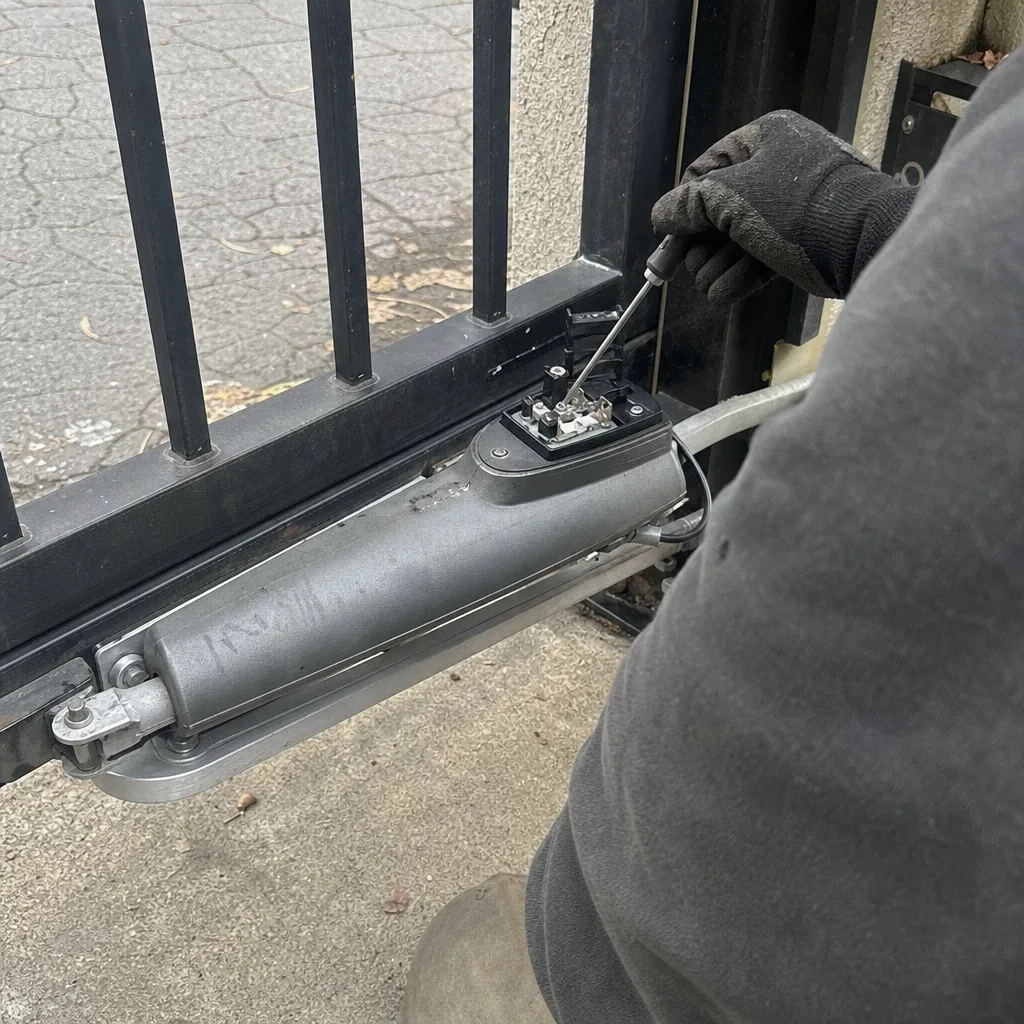
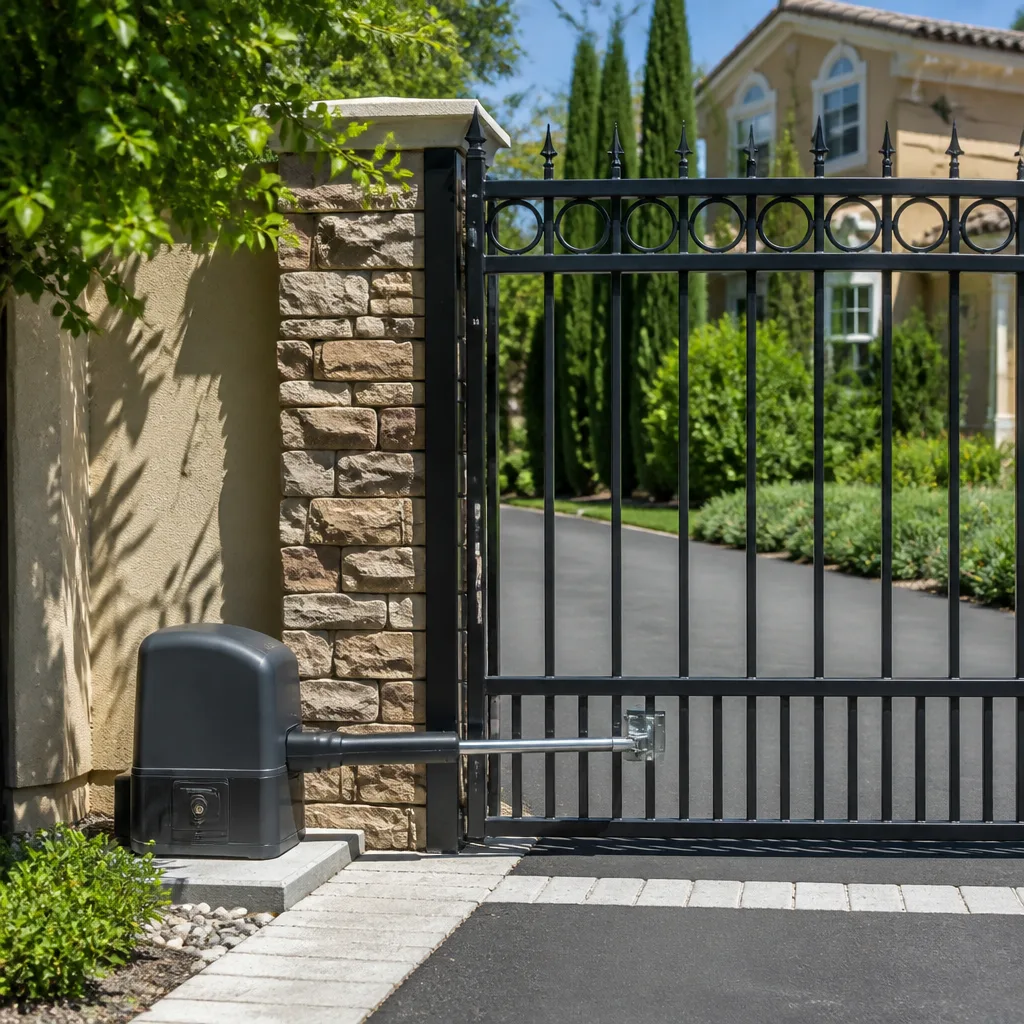 LiftMaster operators
Free on-site gate assessment - hinges, posts, and your LiftMaster or Nice gate operator checked before anything is quoted
The assessment is free and the quote is the invoice.
Get your free estimateGate Repair Warning Signs: A New York Homeowner’s Reference Guide
Here’s a number most New York homeowners don’t expect: a gate motor that gets replaced before it fails costs between $400 and $900. That same motor, ignored until it burns out on a Tuesday morning with your car trapped in the driveway, costs between $1,400 and $2,600 once you factor in the emergency call-out, the full operator swap, and the day you lose waiting for a technician who might not even show. Every gate failure in New York sends signals for weeks before it happens. The problem is that most of us are conditioned to ignore small mechanical annoyances until they become crises. A squeal you hear every morning becomes background noise. A gate that pauses mid-travel becomes a quirk you work around. This guide will teach you to read those signals, understand the mechanical story behind each one, and know exactly what it costs to address the problem now versus after full failure. This is what we do every day at Portcullis Gate Repair New York home, and these are the warning signs we wish every homeowner recognized before the gate stops moving entirely.
Quick Answer
The most common gate repair warning signs in New York are a motor that hums without moving the gate, a gate that reverses direction on its own, grinding or squealing sounds during operation, visible rust bleeding through paint on iron gates, and a gate that moves slower than it did six months ago. Any one of these signals means the gate is telling you something specific about which component is wearing out. Catching the signal early typically means a $200 to $500 repair; ignoring it until full failure usually means a $1,200 to $3,000 replacement.
Styles & brands we work with
Table of Contents
- The Sound Signals: What Grinding, Clicking, Squealing, and Thumping Actually Mean
- Visual Warning Signs on Iron and Steel Gates: Surface Rust vs. Structural Rust
- Automatic Gate Operator Warning Signs: Slow Response, Reversed Direction, Incomplete Travel
- The Urgency Tiers: From Schedule Within 30 Days to Stop Using the Gate Today
- The Newspaper Test and Other Simple Homeowner Checks That Reveal Hidden Wear
- Why New York’s Climate Accelerates Gate Wear: Salt, Humidity, and Freeze-Thaw Cycles
- The Cost of Now vs. The Cost of Later: What Each Warning Sign Costs If You Wait
- What the Kingswell Way Means for a Homeowner Standing in Front of a Failing Gate
The Sound Signals: What Grinding, Clicking, Squealing, and Thumping Actually Mean
Gates talk. Most homeowners just haven’t learned the vocabulary. Four specific sounds account for the majority of gate failures we see across New York, and each one points to a different component with a different price tag attached.
A grinding sound during gate travel almost always means metal-on-metal contact somewhere in the drive system. On a sliding gate, it’s typically the track wheels or the roller bearings wearing out. On a swing gate, it’s often the hinge pins or the actuator’s internal gear train. The mechanical story is simple: lubrication has failed, or a bearing has worn to the point where hardened steel surfaces are now scraping against each other. Every cycle of the gate shaves microscopic metal particles off those surfaces. Left unaddressed, the damage spreads: what starts as a $50 hinge pin replacement becomes a $400 weld repair on the gate frame, and what starts as a $180 roller replacement on a sliding gate becomes a $1,100 track replacement when the wheel chews through the rail.
A clicking sound, especially right when the gate starts or stops moving, is usually the operator’s limit switch or the capacitor trying to engage a motor that’s struggling against resistance. Think of it as the gate’s starter motor clicking in a car with a dying battery. The click is the electrical system telling you the mechanical load has increased beyond what the motor was designed to handle. It could be a hinge binding up, a wheel off track, or something as simple as a branch wedged in the gate’s path. The click itself isn’t the problem; it’s the symptom of a load problem that will eventually kill the motor. On gates we service in neighborhoods like Riverdale and Forest Hills, clicking that goes untreated for a season typically ends with a motor replacement that could have been avoided with a hinge adjustment or a track realignment costing a fraction of the price.
A squealing sound, high-pitched and consistent, is the classic cry of a belt-driven or chain-driven operator that’s lost tension. The belt or chain is slipping on the drive pulley or sprocket. It’s the same sound a car’s serpentine belt makes when it’s glazed and stretched. On belt-drive operators, a tension adjustment and belt inspection runs $120 to $250. If the squeal is ignored, the belt eventually shreds or walks off the pulley entirely, and suddenly the gate won’t move at all. On chain-drive systems, the repair is similar, but the chain itself may need replacing if it’s been slipping long enough to wear the sprocket teeth.
A thumping sound, rhythmic and heavy, as the gate moves is different from all of the above. It’s almost always a wheel or roller with a flat spot or a warped section of track. Sliding gates in New York develop flat spots on their rollers from sitting stationary through cold weather and then being asked to roll. The flat spot thumps with every rotation. Ignored, that flat spot hammers the bearing into submission and the wheel seizes, which then drags the gate across the track and scores the galvanized surface. A $90 wheel replacement becomes a $700 track section replacement plus a service call where the technician has to jack the gate up to get the old wheel off. Thumping is the sound of preventable escalation.
The takeaway from all four sounds: they are not personality quirks. Each one is a specific component telling you, in the only language it has, that wear has begun. The repair that addresses the sound now is always cheaper than the repair that addresses the failure later.
Visual Warning Signs on Iron and Steel Gates: Surface Rust vs. Structural Rust
Wrought iron and steel gates are the most common residential gate materials in New York, and they rust. That’s not a defect; it’s chemistry. But there’s a difference between surface rust that’s cosmetic and structural rust that’s dangerous, and the difference is visible if you know what to look for.
Surface rust is what you see when the paint cracks or chips and orange-brown oxidation forms on the exposed metal. It looks bad, and it will spread if left untreated, but the underlying metal is still sound. Surface rust is a maintenance issue. Sand the affected area, apply a rust converter or primer, and repaint. Done properly, that’s a $100 weekend project or a $300 professional touch-up. What you’re looking at is a cosmetic problem that becomes a structural problem only through years of neglect.
Structural rust is different. Structural rust doesn’t just sit on the surface; it penetrates. The signals are flaking or scaling that comes off in layers, rust bleeding through the paint from underneath, pitting that leaves visible craters in the metal’s surface, and a brownish stain drippage below rusted areas that stains concrete or stone. On an iron gate, structural rust shows up first at the joints: where pickets meet rails, where hinges bolt to the gate, and anywhere water can collect and sit. We’ve seen New York gates that look perfectly painted on the outside but are hollow inside the bottom rail because water got in through a pinhole and sat there for a decade.
The test is simple and doesn’t require tools. Take a screwdriver or a key and tap the rusted area. Solid metal gives a clear, ringing “tink” sound. Structurally rusted metal gives a dull “thud” or, worse, the metal flakes away under the pressure. Another tell: if the gate feels lighter than it did when it was installed, or if you can see the gate sagging slightly at the hinge side, rust has likely eaten the internal structure. A gate that sags at the latch by even half an inch is a gate whose frame is compromised.
Here’s what’s at stake. A structurally rusted gate doesn’t just need repair; it needs section replacement or full gate replacement. On a standard 12-foot residential gate in New York, a section rebuild with new steel runs $800 to $1,800. A full custom gate replacement runs $2,500 to $6,000 depending on size and design. The difference between a $300 surface-rust touch-up and a $4,000 replacement is often just two or three years of catching it early versus waiting. And the security implication matters: a structurally rusted gate is easier to force open, and the hinge failure that follows can send a heavy iron gate falling with enough force to injure anyone standing in its path.
Automatic Gate Operator Warning Signs: Slow Response, Reversed Direction, Incomplete Travel
If the gate’s sound signals are the language of mechanical wear, the operator’s behavioral signals are the language of electrical and sensor distress. Automatic gate operators in New York are increasingly common, and their warning signs are often misread as glitches rather than diagnostics.
Slow response time, where the gate takes noticeably longer to start moving after you press the remote or keypad, is one of the earliest signs of a failing capacitor or a weakening motor. The capacitor is the electrical component that provides the initial surge of power to get the motor turning. They degrade over time, and cold weather accelerates the process. In New York winters, we see a surge of capacitor failures in December and January when the oil inside the capacitor thickens and its ability to hold charge drops. A slow start in the summer often becomes no start by winter. The repair is straightforward and usually runs $150 to $350 including the part, but the failure mode is absolute: when the capacitor goes, the gate simply won’t move, and you’re waiting for a service call that, for most companies, takes days. Our Electric Gate Repair in New York team carries replacement capacitors on every truck for exactly this reason.
A gate that reverses direction on its own isn’t glitching. It’s the safety sensor system telling you the gate is misaligned enough to detect a phantom obstruction. The photo-eye sensors mounted near the ground on each side of the gate opening send an invisible beam across the opening. If that beam is interrupted, the operator treats it as an obstruction and reverses the gate. When the sensors get knocked slightly out of alignment by a lawnmower bump, a delivery truck, or frost heave shifting the mounting posts, the beam misses the receiver and the gate behaves as if something is in the way. The immediate fix is to turn off the auto-close feature, but the real solution is a sensor realignment and, if the misalignment keeps happening, remounting the sensors on more stable posts. The danger of ignoring this: many homeowners respond by adjusting the sensor position manually or, worse, disabling the sensor entirely, and then the motor burns out within weeks because it’s constantly fighting an obstruction signal or running with no safety feedback. In our experience, a reversing gate that’s ignored for a month turns into a dead operator more often than any other single warning sign.
Incomplete travel, where the gate stops short of full open or full close position, points to one of three root causes. First, the limit switches, which tell the operator where the gate should stop, may have drifted out of calibration. Second, something in the gate’s path is binding mechanically and creating enough resistance to trip the operator’s internal force sensor. Third, on belt or chain drive systems, the belt or chain may have stretched enough that the operator thinks the gate has traveled further than it actually has. Each of these is a diagnosis, not a guess, and the repair is appropriately different: limit switch adjustment runs $120 to $200, a binding gate needs a mechanical repair that addresses whatever is causing the bind, and a stretched chain or belt needs replacement at $180 to $400. The shared thread: the gate is telling you it can’t do the full job it’s being asked to do, and every incomplete cycle puts wear on components that aren’t designed to stop mid-travel.
We field constant calls from homeowners whose operators have been “acting weird” for a month and then died completely. The truth is that the weirdness was never random. Every behavior signal maps to a specific component. The operator is running diagnostics on itself literally every time you press the button; the trick is knowing how to read the output. For deeper context, see our guide on How to Hire a Gate Repair Contractor in New York: A Step-by-Step Guide.
The Urgency Tiers: From Schedule Within 30 Days to Stop Using the Gate Today
Not all warning signs demand the same response. We organize gate repair urgency into three tiers, and understanding which tier a signal belongs to is the single most useful thing a New York homeowner can learn from this guide. Here’s how we break it down, based on the failure timelines we’ve documented across thousands of gates in the metro area.
Tier 1: Schedule service within 30 days. These are the early-warning signals. The gate has not failed, nothing is dangerous, but wear has begun and the clock is ticking. Examples: a mild squeal that only happens on cold mornings; surface rust that’s starting to spread but hasn’t pitted the metal; a gate that’s moving slightly slower than it did the previous season; a click on startup that’s intermittent rather than constant. The cost to address Tier 1 signals is almost always under $400 and often under $200. The repair is usually done same-visit without needing parts ordered.
Tier 2: Schedule service within 7 days. These signals mean a specific component is actively failing. The gate still operates, but a breakdown is weeks away, not months. Examples: grinding that’s audible every cycle; a reversing gate that needs the auto-close disabled to function; incomplete travel that requires you to hold the remote button down to get the gate to close; rust that’s pitting or flaking at the hinge points; a thumping wheel on a sliding gate. The repair for Tier 2 issues typically runs $250 to $900, and if caught at this stage, we’re replacing a part rather than a system. Schedule the service when the pattern appears, not when the gate finally quits.
Tier 3: Stop using the gate today. These signals mean the gate is no longer safe to operate, either because it could close on a person or vehicle or because continued operation will destroy the remaining functional components. Examples: a gate that reverses direction unpredictably with the safety sensors bypassed; a gate that sags visibly at the latch and drags on the ground; exposed wiring or a burning smell from the operator; a gate that shudders or jerks during travel. Tier 3 failures require immediate professional attention, and continuing to operate the gate in this condition will, in almost every case, turn a repair into a replacement. The cost difference is stark: a Tier 3 caught and repaired the same day often runs $400 to $1,200, while the full system replacement that follows a week of ignored Tier 3 operation runs $1,500 to $3,500 or more. At Gate Repair in New York with Portcullis, our technicians answer calls 24/7 specifically because Tier 3 signals don’t respect business hours.
The common thread across all three tiers: every Tier 3 signal started as a Tier 1 signal that was observed and ignored. Gates do not fail suddenly. They fail on a schedule that can be read weeks in advance by anyone who knows what to look and listen for.
The Newspaper Test and Other Simple Homeowner Checks That Reveal Hidden Wear
You don’t need tools or technical knowledge to run basic diagnostics on your gate. More importantly, running these checks monthly takes five minutes and catches Tier 1 problems before they become Tier 3 emergencies. We’ve taught these exact checks to hundreds of New York homeowners, and we cover additional techniques in more guides & resources on our blog.
The Newspaper Test: Step by Step
- Take a single sheet of newspaper or a piece of standard printer paper.
- Open the gate fully and wait for it to stop moving.
- Place the sheet of paper between the gate and the post at the latch side, about chest height.
- Close the gate. The test is what happens when the gate touches the paper.
- If the gate traps the paper firmly and you can’t pull it free, the gate is closing too tightly, which means the limit switch or the mechanical stop needs adjustment.
- If you can pull the paper free with almost no resistance, the gate is not closing fully, which means the latch isn’t engaging and the gate can swing or slide open on its own.
- The ideal result: the paper offers some resistance but pulls free without tearing. That’s the correct crush force for a properly adjusted gate.
This single test tells you whether your gate’s travel limits are set correctly, which is the single most common cause of premature operator failure we see in New York. A gate that closes too tightly pushes the motor past its intended stop point on every cycle, and a gate that doesn’t close fully leaves your property unsecured while the operator continues trying to close it against a latch that never engages.
The Coin Test for Track Alignment
- For sliding gates, place a quarter on the track rail at three points: near the open position, at the midpoint, and near the closed position.
- Run the gate over the quarter at each position.
- If the gate rolls over the quarter without dislodging it, the track and wheels are aligned and rolling true.
- If the gate knocks the quarter off the rail or if the quarter gets jammed, the wheels are out of alignment or the track has developed a warp.
The coin test reveals track misalignment weeks before you’d hear a sound or see the gate start to bind. In New York, track misalignment often starts with frost heave in February: the ground shifts, the track shifts with it, and the gate starts fighting a rail that’s no longer level.
The Finger-Wiggle Test for Hinges
Grab the gate at the latch side with both hands and try to lift it. If there’s more than a quarter-inch of vertical play, your hinge pins or track wheels are wearing. Now wiggle the gate left and right. If it moves side to side at the latch, the hinges or rollers have lateral play that will worsen. A properly hung gate should feel solid, with no more give than you’d expect from a well-set door. This test catches hinge wear early enough that the fix is a pin replacement or bushing swap rather than a hinge rebuild. For residents who’ve had us out for Gate Installation in New York, we walk through this exact check before we leave so they know what “correct” feels like.
The Listening Routine
Once a week, stand next to the operator housing while the gate runs through a full open-and-close cycle. Listen for any sound that wasn’t there the week before. Grinding, clicking, squealing, thumping: each one means something specific, as covered above. The routine matters because gates rarely develop problems overnight; the sound starts faint and builds over weeks. The homeowner who listens weekly catches the sound at its faintest, earliest, and cheapest stage. The homeowner who doesn’t listen at all discovers the problem when the gate no longer moves.
Why New York’s Climate Accelerates Gate Wear: Salt, Humidity, and Freeze-Thaw Cycles
Gate wear is not a uniform national problem. A gate in Arizona and a gate in New York will fail in different ways at different speeds, and understanding the local factors lets you anticipate problems before they start.
Road salt is the biggest factor. In New York, road salt is everywhere from November through March, and it doesn’t stay on the road. It aerosolizes as cars drive over it, coats everything near the roadway, and works its way into gate hinges, roller bearings, and chain links. Salt is hygroscopic, meaning it attracts moisture from the air even when it hasn’t rained or snowed directly on the gate. That moisture accelerates rust, and the salt itself acts as an electrolyte that speeds the oxidation process. We see more rusted-out bottom rails and seized hinge pins in New York between January and April than we see in the other eight months combined. The preventive step is straightforward: hose down gate hardware after big winter storms and apply a light lubricant to hinges and rollers in early spring.
Humidity is a year-round factor. New York’s summers are humid, and coastal areas from the Rockaways up through the Bronx add salt-laden ocean air to the moisture problem. Any gate with a nick or crack in its paint finish is vulnerable, because humidity gets under the paint and rust blooms from the inside out. The paint looks fine until the rust has spread enough to push through, and by then the damage is deeper than a surface touch-up can fix. A spring inspection that catches paint chips and seals them is one of the most cost-effective preventive steps a New York homeowner can take.
Freeze-thaw cycles attack concrete and steel alike. In a single New York winter, the temperature can cross the freezing line dozens of times. Water gets into hairline cracks in concrete gate posts and footings, freezes and expands, and widens the cracks. Over repeated cycles, the post shifts, the gate sags, and the alignment problems cascade: hinge bind, latch misalignment, operator force errors. Sliding gate tracks set in concrete are especially vulnerable, because the track’s anchor bolts can work loose as the concrete around them degrades. We’ve replaced more tracks in New York that were destroyed by frost heave than by any other cause.
The climate-specific takeaway: your gate is not just a mechanical system; it’s a mechanical system living in a salt-and-moisture environment that’s actively hostile to metal. A maintenance rhythm that fits New York’s calendar, spring lubricant and rust check after salt season, fall lubrication before the cold, will extend the life of every component by years. See our Seasonal Gate Repair Care for New York: Year-Round Homeowner’s Guide for a month-by-month schedule.
The Cost of Now vs. The Cost of Later: What Each Warning Sign Costs If You Wait
The entire thesis of this guide is that every warning sign is a number. Here’s the direct comparison for the most common signals we see across New York. These are real ranges based on the job pricing we quote every day at Portcullis Gate Repair New York, and they reflect the difference between catching a signal at Tier 1 and repairing it at Tier 3.
- A squealing belt on a sliding-gate operator: $120 to $250 for tension adjustment and inspection now. $400 to $800 for belt replacement and pulley reconditioning after failure.
- A reversing gate with misaligned photo-eyes: $150 to $300 for sensor realignment and remounting now. $1,200 to $2,200 for a full operator replacement after the motor burns out from repeated obstruction cycles.
- Surface rust on a swing gate: $100 to $350 for sanding, treatment, and repaint now. $800 to $1,800 for steel section replacement after rust penetrates through the frame.
- A thumping roller on a sliding gate: $90 to $250 for wheel replacement now. $700 to $1,500 for track section replacement after the seized wheel gouges the rail.
- A clicking operator that struggles on startup: $150 to $350 for capacitor replacement now. $900 to $1,800 for motor replacement after the capacitor fails completely and the motor is left drawing locked-rotor current.
- A gate that sags at the latch: $200 to $500 for hinge rebuild or post stabilization now. $1,500 to $4,500 for a full gate replacement after hinge failure drops the gate off its mountings.
All pricing is quoted in writing before any work begins. That’s not an add-on at Portcullis Gate Repair New York; it’s the foundation of how we do business. The written price means you’ll see the exact number before a single bolt is turned, and the number doesn’t change after the work begins. Our customers also get the Kingswell Guarantee on every repair: the work is covered in writing for 365 days, and if the repair fails within that period, we come back and fix it at no charge. That’s the 365-Day Done Right Promise, and it’s stamped on every invoice we write in New York.
What the Kingswell Way Means for a Homeowner Standing in Front of a Failing Gate
When your gate is making a sound you don’t recognize, or it’s stopped moving entirely, you’re going to call someone. The question is who. Here’s what we’d tell any New Yorker who’s been burned by a gate company before and is wary about calling another one.
The Kingswell Way is a set of five commitments that every Portcullis location, including ours here in New York, is bound to on every job. First: we say the price before the work. You get the number in writing before the technician starts, and that’s the number you pay. Second: we show up in the window we gave you. A real arrival window, not a four-hour block of waiting. Third: we leave the place cleaner than we found it. Fourth: we put the guarantee in writing. Every repair carries the 365-Day Done Right Promise, and if the repair fails within that year, the return visit is free and the correction is free. Fifth: we come back if it fails. That’s the whole point of the written guarantee.
Every Portcullis location is independently owned and operated, but held to the identical Kingswell Guarantee. That’s not a franchise promise; it’s a written one, stamped on the invoice. When Dean Prescott founded this company in 2008, the bet was simple: if we write the price down before the work, show up when we say we will, and back the repair in writing for a full year, New York homeowners will choose us over the cheaper quote every time. That bet has been correct for a long time.
Our technicians are background-checked and arrive in uniform. They know who’s showing up, and they know the technician arriving has already been trained on the specific operator on the property, whether it’s LiftMaster, FAAC, BFT, Linear, Viking, Ghost Controls, DoorKing, Elite, or Mighty Mule. The truck arrives with the common parts on board: capacitors, belts, chains, sensors, limit switches, wheels, rollers. Most repairs happen the same day, in a single visit.
And when you call Portcullis Gate Repair New York, a live person answers. Not a voicemail tree, not a callback queue. A person, 24 hours a day, 7 days a week, including holidays. If your gate fails at 9 p.m. on a Sunday in December, someone picks up. That matters in New York, where a failed gate is also a security vulnerability: an open driveway, an exposed backyard, a property that’s harder to secure.
Common Mistakes to Avoid
- Ignoring a grinding sound because the gate still works. The gate may work right up until the day it doesn’t, but the grinding sound means metal is being ground away every time it moves. That damage is cumulative and irreversible, and it’s always cheaper to address before the part fails entirely.
- Lubricating hinges and rollers without cleaning them first. Adding fresh grease over old grease that’s full of dirt and metal particles creates an abrasive paste that accelerates wear. Clean first, lubricate second, and use the right lubricant for the component.
- Bypassing safety sensors instead of repairing them. If your gate keeps reversing because the sensors are misaligned, fixing the sensors is a $150 to $300 repair. Bypassing them and running the gate anyway turns a minor repair into a motor replacement and turns a safe gate into a safety hazard for children and pets.
- Treating rust as a cosmetic issue by default. In New York’s salt-heavy environment, rust that’s been visible for more than a season has often worked deeper than the surface. Tapping the rusted area with a key is the quickest way to tell whether you’re looking at surface rust or structural damage.
- Replacing a gate when a component replacement would do. We see homeowners quoted for full gate replacement when the actual problem is a $200 hinge rebuild or a $350 operator repair. Get a written diagnosis that explains which component has failed before agreeing to replace the whole system.
- Waiting until the gate stops moving entirely to call anyone. The emergency callout, the overtime rate, the full system replacement that follows ignored warnings: all of it is avoidable. Every Tier 3 failure on our schedule this year started as a Tier 1 warning someone lived with for weeks or months.
See the difference
 Before
 After
After Before
 After
After Before
 After
AfterWhen to Call a Professional
Call a professional when the gate is making a sound you can’t identify, when it’s moving in a way it didn’t six months ago, when rust has progressed past the surface, when the operator is behaving erratically, or when the gate has stopped moving entirely. Simple maintenance checks, lubrication, paint touch-ups, and routine observation are homeowner territory. Anything involving the operator’s electrical system, the gate’s structural integrity, or the safety sensors belongs in the hands of a trained technician who can diagnose the specific component failure and repair it correctly. Operating a gate with an electrical fault or structural damage is dangerous, and the repair is almost always more expensive after continued operation than it would have been at the first sign of trouble. Portcullis Gate Repair New York home offers free estimates throughout the New York metro area, and a live person answers the phone 24/7 at (845) 259-0242. Call whenever the warning sign appears, and we’ll tell you honestly whether it’s a Tier 1 fix, a Tier 2 repair, or a stop-using-it-today situation.
Frequently Asked Questions
Gate repair in New York typically costs between $200 and $900 for most mechanical and operator repairs, including hinge rebuilds, roller replacements, sensor realignment, capacitor swaps, and belt tension adjustments. Full operator replacements run $1,200 to $2,600 depending on the brand and model, and structural gate repairs or full gate replacement runs $1,500 to $6,000. Every Portcullis job includes a written price before work starts, so you’ll know exactly what the repair will cost before we turn a single bolt. Call (845) 259-0242 for a free estimate on your specific gate.
In most cases, yes. Our New York technicians answer calls 24 hours a day, 7 days a week, and we schedule arrival windows we actually keep. Emergency repairs, where the gate won’t close and the property is unsecured or a vehicle is trapped, are handled on a priority basis with same-day dispatch whenever our schedule allows. Call (845) 259-0242 and a live person will give you a real arrival window, not a four-hour block of waiting.
The 365-Day Done Right Promise covers the repair we performed, in writing, for 365 days from the date of service. If the repair fails within that year, we come back and make it right at no charge, including the return visit. The promise is stamped on every invoice as part of the Kingswell Guarantee, along with the written price and the arrival window we committed to. It’s not a verbal promise; it’s a written one.
A gate that reverses direction on its own is almost always reacting to a misaligned safety sensor system. The photo-eye sensors on both sides of the gate opening send an invisible beam across the opening, and when that beam isn’t aligned correctly, the operator interprets it as an obstruction and reverses the gate. The fix is a sensor realignment, and in cases where the misalignment keeps happening, remounting the sensors on more stable posts. Ignoring the reversal and bypassing the sensors will burn out the motor within weeks.
Our technicians are trained and certified on nine major gate operator brands: LiftMaster, FAAC, BFT, Linear, Viking, Ghost Controls, DoorKing, Elite, and Mighty Mule. That means when the technician arrives, you don’t pay for on-the-job learning. The tech already knows the specific system on your property, and the truck carries the common replacement parts for those brands. Call (845) 259-0242 and tell us which operator is on your gate; we’ll confirm coverage before we schedule.
Call us. A gate stuck open is a security issue as much as a mechanical one, and a live person answers the Portcullis phone 24 hours a day, 7 days a week, including holidays. We treat an open, unsecurable gate as an emergency, and we’ll dispatch a technician with a real arrival window. While you wait, we can walk through simple diagnostics on the phone: checking the sensor alignment, testing the remote batteries, checking whether the breaker has tripped. Call (845) 259-0242 and we’ll help you figure out what’s happening right now.
The Bottom Line
Your gate has been telling you what’s wrong this whole time. The grinding sound is a bearing dying. The squeal is a belt slipping. The reversal is a sensor misaligned. The rust that’s pitting is structural damage working toward a hinge failure. Every one of these signals maps to a specific repair with a specific price, and the price of addressing the signal now is always a fraction of the price of addressing the failure later. In New York, where salt and humidity work against every metal surface, the margin for ignoring warning signs is even thinner. Learn the sounds, run the checks, and when you hear something you can’t identify, call a professional who will give you a written price before the work and a written guarantee after. The gate is talking. The only question is whether you’re listening.
Written by Dean Prescott, Owner at Portcullis Gate Repair New York, serving New York since 2008.