
Last updated October 16, 2026
 Wrought iron
 Wood & steel frame
 Farm & ranch
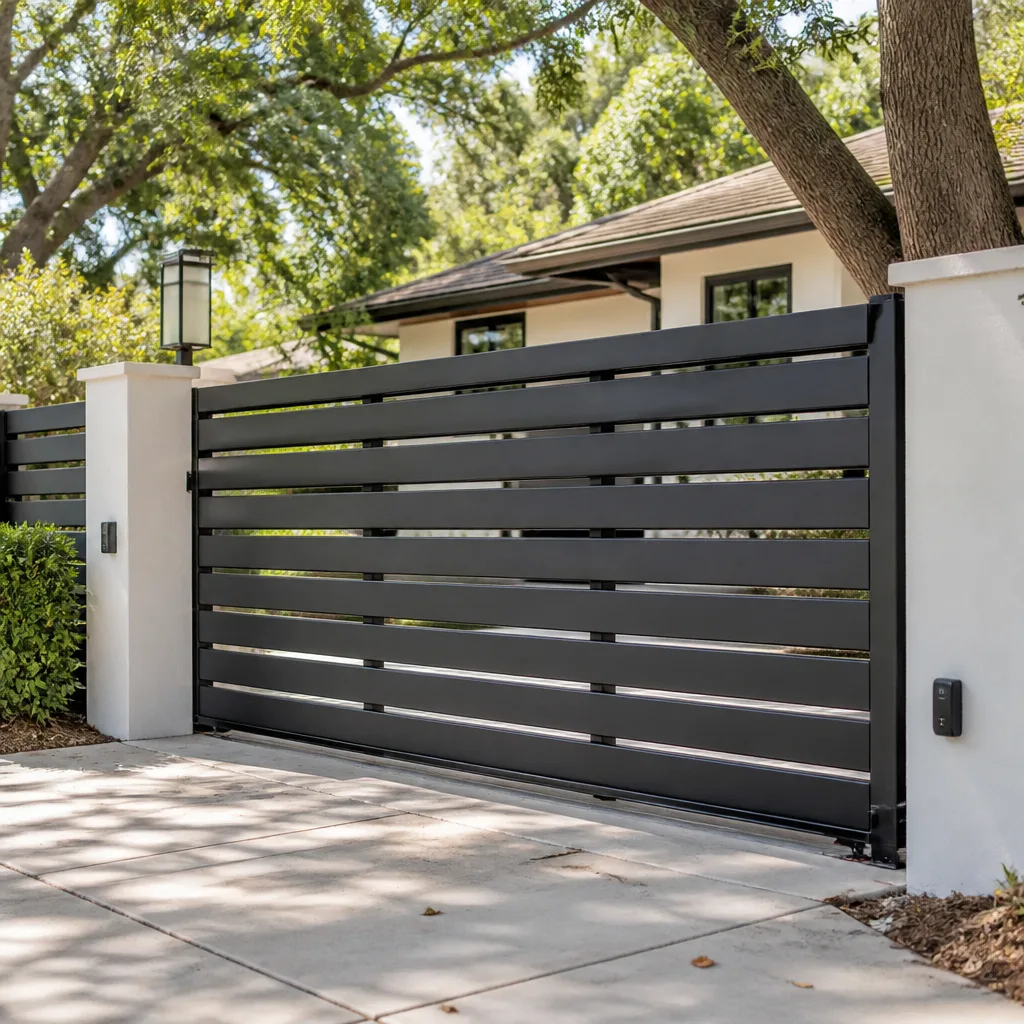 Sliding driveway gates
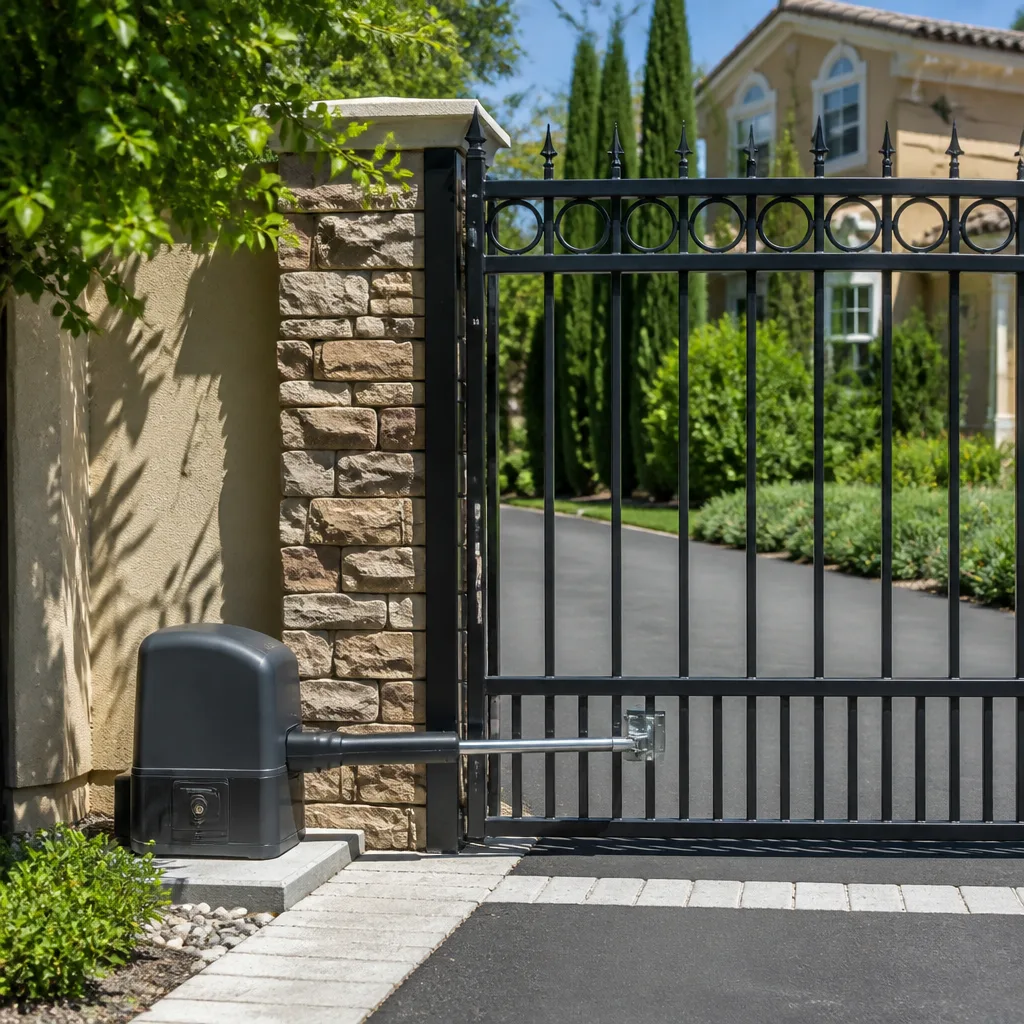 LiftMaster operators
Free on-site gate assessment - hinges, posts, and your LiftMaster or Nice gate operator checked before anything is quoted
The assessment is free and the quote is the invoice.
Get your free estimateGate Repair Permits, Codes & Inspections in NY: What You Need to Know
Replacing a gate motor in a landmark district without the right sign-off can result in a stop-work order that costs more to resolve than the original repair, and most New York homeowners have no idea the rule applies to them. The city’s gate-work rules sit at a strange three-way intersection of Department of Buildings regulations, Landmarks Preservation Commission authority, and co-op or condo board bylaws. What counts as a repair in one borough can count as an alteration in another, and a board that approved your neighbor’s hinge swap may reject yours outright. This guide explains which gate projects need a permit, which fall under ordinary maintenance, and who carries the legal weight when nobody files at all.
Styles & brands we work with
Quick Answer
Most gate repairs in New York City – motor swaps, hinge replacements, panel fixes, sensor realignment – fall under our Gate Repair services as ordinary maintenance and do not require a DOB permit, provided you are not changing the gate’s footprint, height, or structural anchoring. A new gate installation, a gate moved to a different location, or a gate built taller than existing code allows does require a permit, and in an LPC-designated historic district even a like-for-like replacement may need Landmarks approval first. If a permit is required and no one pulls one, the owner is legally responsible, regardless of what the contractor promised.
Table of Contents
- Which Gate Projects Need a NYC DOB Permit (and Which Don’t)
- How Landmarks Preservation Commission Rules Affect Gate Work
- Co-op and Condo Board Authority Over Gate Modifications
- Who Is Legally Responsible for Pulling the Permit
- What a Failed Inspection Costs vs. Doing It Right the First Time
- How to Confirm Your Contractor Actually Filed Before Work Starts
- Common Mistakes to Avoid
- When to Call a Professional
- Frequently Asked Questions
- The Bottom Line
Which Gate Projects Need a NYC DOB Permit (and Which Don’t)
The dividing line in New York City code is simpler than most people expect, but it is not intuitive. A permit is required when the work changes the gate’s structural relationship to the property. A permit is not required when the work restores an existing gate to its designed function. That single sentence resolves about eighty percent of the confusion we see on service calls across the five boroughs; for deeper reading, see our Gate Repair Warning Signs: A New York Homeowner’s Reference Guide.
Here is the breakdown by project type, based on how the DOB classifies gate work under the Building Code’s maintenance provisions:
- Gate motor and operator replacement: No permit. Swapping a LiftMaster, FAAC, or BFT operator for a comparable unit is ordinary maintenance. The gate’s structure, anchoring, and footprint are unchanged.
- Hinge and roller replacement: No permit. In-kind hinge swaps, wheel replacement, and track realignment are maintenance, not alteration.
- Panel replacement (like-for-like): No permit, as long as the replacement panels are materially identical in size, weight, and material to the originals. Switching a steel panel for a much heavier wrought-iron panel can cross into alteration territory.
- Sensor and safety-edge repair: No permit. These are electrical maintenance items tied to operator function, not structural changes.
- New gate installation: Permit required. A gate that did not previously exist is an alteration to the property and requires DOB filing.
- Gate relocation or footprint expansion: Permit required. Moving a gate post, widening the drive opening, or adding a pedestrian gate next to a vehicle gate changes the site plan and triggers filing.
- Gate height increase: Permit required. New York zoning rules limit fence and gate heights in front yards to four feet in most residential districts. Raising a gate above the legal limit without a variance is both a permit violation and a zoning violation.
- Structural post replacement: Usually a permit. Replacing a rotted wood post with a steel post, or enlarging the footing, is structural work. An in-kind post replacement using the same material and footing may qualify as maintenance, but this is the grayest area in the list.
One note for New York readers: these classifications reflect how the DOB has generally applied the code in recent years, but interpretations vary by borough and by inspecting unit. When in doubt, a call to the DOB borough office before work starts costs nothing and can save a demolition order later. Portcullis Gate Repair New York handles this classification on every gate repair in New York job, so customers are not guessing on their own.
How Landmarks Preservation Commission Rules Affect Gate Work
Most homeowners assume the Landmarks Preservation Commission only cares about the front door, the windows, and the cornice. In practice, the LPC reviews gates, fences, railings, and any exterior element visible from a public street. If your home sits inside an LPC-designated historic district, or is an individual landmark, your gate is part of the protected streetscape.
Here is what LPC rules mean for gate projects in the five boroughs:
- Repairs that do not change appearance: LPC approval is generally not required for in-kind repairs. Replacing an actuator – the motorized arm that physically pushes the gate open – or rewiring an operator does not alter the gate’s appearance, so Landmarks stays out of it.
- Replacement with a visually identical gate: LPC does require a permit, known as a Certificate of No Effect or a staff-level approval, depending on the district rules. You cannot assume a like-for-like replacement is exempt. The commission wants to review material, finish, and profile before work begins.
- Replacement with a different gate style: Full LPC public hearing is likely. The commissioners review whether the proposed design is compatible with the district’s architectural character. This process adds months, not weeks, to a project timeline.
- New gate where none existed: In a historic district, this almost always requires LPC review, even if the DOB classification of the work would not trigger a permit on its own.
The boroughs are not evenly affected. Manhattan has the largest concentration of LPC-designated blocks, followed by Brooklyn, particularly in neighborhoods like Brooklyn Heights, Park Slope, and Fort Greene. Queens and Staten Island have far fewer districts, and the Bronx has scattered individual landmarks. If you own a home on an LPC block, the landmarks review is often the longer and more expensive process than the DOB filing. Budget for both timelines.
We have seen stop-work orders issued on gate installation in New York projects where the DOB paperwork was clean but the LPC sign-off was missing. A DOB inspector and an LPC enforcement officer work from different checklists, and both carry the authority to halt the job.
Co-op and Condo Board Authority Over Gate Modifications
If you live in a co-op or condo, the building’s board can impose requirements that go beyond what the city mandates. The board’s authority comes from the proprietary lease or the condominium bylaws, not from the Building Code, which means you can be fully DOB-compliant and still in violation of your own building’s rules.
Here are the most common board-level gate requirements we encounter in New York buildings:
- Written alteration agreement before any work. Many co-ops require a signed alteration agreement that names the contractor, describes the scope, and includes proof of the contractor’s insurance. Boards want a named insured certificate, not a generic COI.
- Board-approved contractor lists. Some buildings maintain a pre-approved list of gate contractors. If your contractor is not on the list, the board may require a board interview or outright deny access.
- Architect or engineer sign-off. For gate replacement in larger buildings, boards often require a stamped drawing showing that the new gate does not interfere with fire egress, sidewalk vaults, or the building’s structural walls.
- Specific aesthetic standards. Boards in prewar buildings frequently mandate a particular finish, material, or gate profile to match the building’s other exterior elements. This is separate from any LPC requirement.
- Insurance minimums. A common threshold is $1 million in general liability, sometimes $2 million in Manhattan. A contractor without adequate coverage will be turned away, even if the price is right.
The consequence of skipping board approval is not a city fine. It is a board notice to remove the work at your expense, and potentially a monetary penalty under the alteration agreement. In the most difficult cases, a board can require restoration of the original gate, which can cost more than the new installation itself. If you live in a co-op or condo, treat board approval as a step in the project timeline, not an optional courtesy.
Who Is Legally Responsible for Pulling the Permit
Under the New York City Administrative Code, the property owner is legally responsible for ensuring that required permits are filed, regardless of what the contractor says. This is the single most misunderstood rule in residential gate work.
A contractor may promise to handle the filing. A contractor may actually file the application. But if the permit is never pulled, or if the filing is incomplete, the DOB violation is issued to the owner’s property, not to the contractor’s business. The owner is the party the city can compel to appear, the party who pays the fine, and the party who must resolve the stop-work order. This holds true for single-family homes, townhouses, co-op units, and condo units alike.
Here is the practical takeaway: never rely on a verbal assurance. Ask the contractor for the DOB filing receipt before work begins. A filing receipt, known as a work permit or an approval letter depending on the filing type, shows that the application is in the system. If the contractor cannot produce something with a DOB number on it, do not let the job start.
The same logic applies to LPC permits in historic districts. If the contractor says “we don’t need Landmarks for this,” verify that yourself. A five-minute call to the LPC’s public office can confirm whether your property is in a designated district. If it is, and the contractor still insists no approval is needed, find a different contractor. Portcullis Gate Repair New York walks customers through this verification on every electric gate repair in New York project, because we have seen too many homeowners handed a violation for a contractor’s shortcut.
What a Failed Inspection Costs vs. Doing It Right the First Time
The math on this will surprise most New Yorkers. The permit and inspection fees for a typical gate project are modest. The cost of resolving a violation after the fact is not.
Here is a realistic comparison, based on what we have observed across New York residential gate projects:
| Cost Item | Pulled Correctly First Time | Violation After the Fact |
|---|---|---|
| DOB filing fee (residential fence/gate) | $100 – $250 | Same fee, plus late filing surcharge |
| Inspection fee | $0 – $150 depending on filing type | Reinspection fees each cycle |
| Stop-work order resolution | Not applicable | $500 – $1,500 in expeditor fees to lift the order |
| DOB civil penalty | Not applicable | $500 – $5,000 depending on severity and duration |
| Work removed and redone to pass inspection | Not applicable | $1,000 – $4,000 for a typical residential gate |
| LPC violation (historic districts only) | Not applicable | $1,000 – $5,000, plus restoration costs |
| Total realistic range | $100 – $400 | $2,500 – $15,000+ |
The spread between those two columns is not an exaggeration. A stop-work order in New York typically requires an expeditor to clear – a licensed professional who files the corrective paperwork and schedules the reinspection. Expeditors do not work free, and they do not work fast. Adding an LPC component on top of a DOB violation can stretch resolution to six months or longer, during which the gate sits unusable and the property owner carries open violations that can interfere with a sale or refinance.
The cost of pulling the permit correctly the first time is almost always under $400 for a residential gate project. The cost of resolving it later starts around $2,500 and climbs from there. This is one of the few places in home improvement where the cheap route and the expensive route are the same route; the expensive part is simply doing it late.
How to Confirm Your Contractor Actually Filed Before Work Starts
Ten minutes of verification before the first truck arrives is worth a thousand dollars of expeditor fees after the stop-work order. Here is the step-by-step process we recommend to every New York customer:
- Ask for the DOB filing receipt. A legitimate filing produces a document with a DOB filing number on it. A contractor who has actually filed can produce this in minutes from a phone. A contractor who hedges, stalls, or says “it’s being processed” without a number has not filed.
- Verify the number on the DOB’s public portal. The DOB Building Information System, free to use, lets any homeowner search by address and see active permits and filings. If the filing is real, it shows up. If the address shows no record, the contractor has not filed.
- Check whether the filing type matches the work. A contractor may have an old permit on the property from unrelated work. Ask what the filing covers. The filing description should mention the gate, fence, or fence alteration specifically.
- If in an LPC district, ask for the LPC permit number separately. LPC approvals are not visible in the DOB system. Ask for the LPC permit or Certificate of No Effect and verify it with the LPC office directly.
- Get the scope of work in writing. A one-paragraph description, signed by both parties, stating exactly what will be installed or repaired. If a dispute arises later about whether a permit was required, that document protects the homeowner.
This process is not adversarial. Any legitimate New York gate contractor expects to be asked for filing documentation. If a contractor reacts badly to the request, that reaction is the answer. Portcullis Gate Repair New York provides filing documentation on any project that requires it, and we tell customers up front whether their project falls into the maintenance category or the permit category before we quote the work.
Common Mistakes to Avoid
- Assuming a motor swap always needs a permit. It almost never does. Ordinary maintenance on an existing gate is exempt. Overspending on unnecessary permits is common in New York, driven by contractors who bill the filing as a line item but never actually file.
- Assuming a hinge replacement never needs a permit. In-kind hinge swaps are maintenance. But if the new hinges require a larger post, a new footing, or a different mounting point, the work can cross into alteration. The deciding factor is whether the structure changes.
- Letting the contractor skip LPC review in a historic district. Brooklyn Heights, Park Slope, Fort Greene, and much of Manhattan’s West Village carry LPC jurisdiction over exterior gates. In-kind replacement still needs an LPC review. A DOB permit does not satisfy LPC requirements. They are two separate approvals from two separate agencies.
- Treating co-op board approval as a formality. In a co-op, the board can remove your new gate and bill you for restoration. The board’s authority is contractual, not regulatory, which means the city will not help you fight it. Get the alteration agreement signed before work starts.
- Paying a contractor to “take care of the permit” and never verifying. This is the most expensive mistake in the guide. The violation lands on the property owner. The fine lands on the property owner. The expeditor bill lands on the property owner. Always verify the filing yourself.
- Filing for a gate height above zoning limits without a variance. New York residential districts generally cap front-yard fences and gates at four feet, and some districts allow six feet in rear yards. A gate taller than the district allows triggers a zoning violation in addition to the building permit issue.
- Starting work before the LPC public hearing concludes. This mistake can lead to a full demolition order from the commission. If the LPC requires a public hearing, no work of any kind should begin until the hearing is held and the permit is issued.
When to Call a Professional
Permit classification for gate work sits at the intersection of two agencies, a building’s governing documents, and a contractor’s word. That is too many moving parts to navigate alone. Call a professional when your project involves a new gate, a relocated gate, a height change, or any work in an LPC district. Call a professional when you live in a co-op or condo and the board has handed you an alteration agreement with unfamiliar insurance terms. Call a professional when a contractor has told you a permit is not needed and you are not certain whether to believe them. Portcullis Gate Repair New York offers free estimates in New York, and we will tell you honestly whether your project is maintenance or alteration before you spend a dollar. Call (845) 259-0242 to talk it through.
Frequently Asked Questions
No. Replacing a gate operator or actuator – the motorized arm that physically pushes the gate open – is classified as ordinary maintenance when the replacement unit is comparable to the original and no structural changes are made. Common operator brands we service include LiftMaster, FAAC, BFT, and Linear, and swapping any of these for an equivalent model does not trigger a DOB filing. If you are also changing the gate’s mounting points or post positions, the permit question changes. Call (845) 259-0242 and we will classify your project over the phone.
For a typical residential gate project, DOB filing fees run $100 to $250, with inspection fees adding anywhere from nothing to $150 depending on the filing type. If your property sits in an LPC-designated historic district, the Landmarks permit adds its own fee, usually in the $200 to $500 range depending on whether a public hearing is required. The total for a properly permitted gate project is almost always under $400. The cost of resolving an unpermitted project after a stop-work order starts around $2,500 and can exceed $15,000 when LPC restoration is involved.
Yes. A co-op board’s authority comes from the proprietary lease, not from city code, so a board can impose requirements that go beyond what the DOB mandates. Boards commonly require a signed alteration agreement, proof of contractor insurance, a board-approved contractor, and in some buildings an architect’s stamped drawing. A board can deny the project outright, and if work proceeds without approval, the board can require removal and restoration at the unit owner’s expense. In a condo, the standard is generally lighter, but the bylaws still control exterior work.
The DOB issues the violation to the property owner, not to the contractor. The owner pays the civil penalty, the owner pays the expeditor to clear the stop-work order, and the owner pays to have any non-compliant work removed and redone. If the property is in an LPC district, the Landmarks Preservation Commission can add its own violation and require restoration of the original gate. An open violation also interferes with selling or refinancing the property until it is resolved.
If you are replacing an existing gate with a new gate that is materially identical in height, width, weight, and footprint, and the property is not in an LPC-designated district, the work may qualify as maintenance and no DOB permit is required. The phrase “materially identical” does the heavy lifting here. A replacement gate that is heavier, taller, or anchored differently crosses into alteration territory. In an LPC district, even a visually identical replacement requires Landmarks review.
For a straightforward in-kind replacement in a historic district, an LPC staff-level approval can take four to eight weeks. If the commission requires a public hearing – which happens when the proposed gate differs in style or material from the original – the process can take three to six months from hearing scheduling to permit issuance. The DOB filing, if required, runs on a separate track and usually takes two to four weeks. Plan your timeline around the slower of the two. Estimates for Portcullis Gate Repair New York home projects always account for both timelines before work is scheduled.
The Bottom Line
The core lesson of this guide – and of our more guides & resources – is that the permit question in New York is answered by three different authorities, not one. The DOB decides whether the work is maintenance or alteration. The Landmarks Preservation Commission decides whether the work changes a protected streetscape. The co-op or condo board decides whether the work is allowed in the building at all. Three separate approvals, three separate timelines, and one clear rule: the property owner carries the legal weight when a required permit goes unfiled. Verify a filing before work starts, budget for LPC review if you live in a historic district, and put the scope of work in writing. The cheapest gate project in New York is the one that never generates a violation.
Written by Dean Prescott, Owner at Portcullis Gate Repair New York, serving New York since 2008.
See the difference
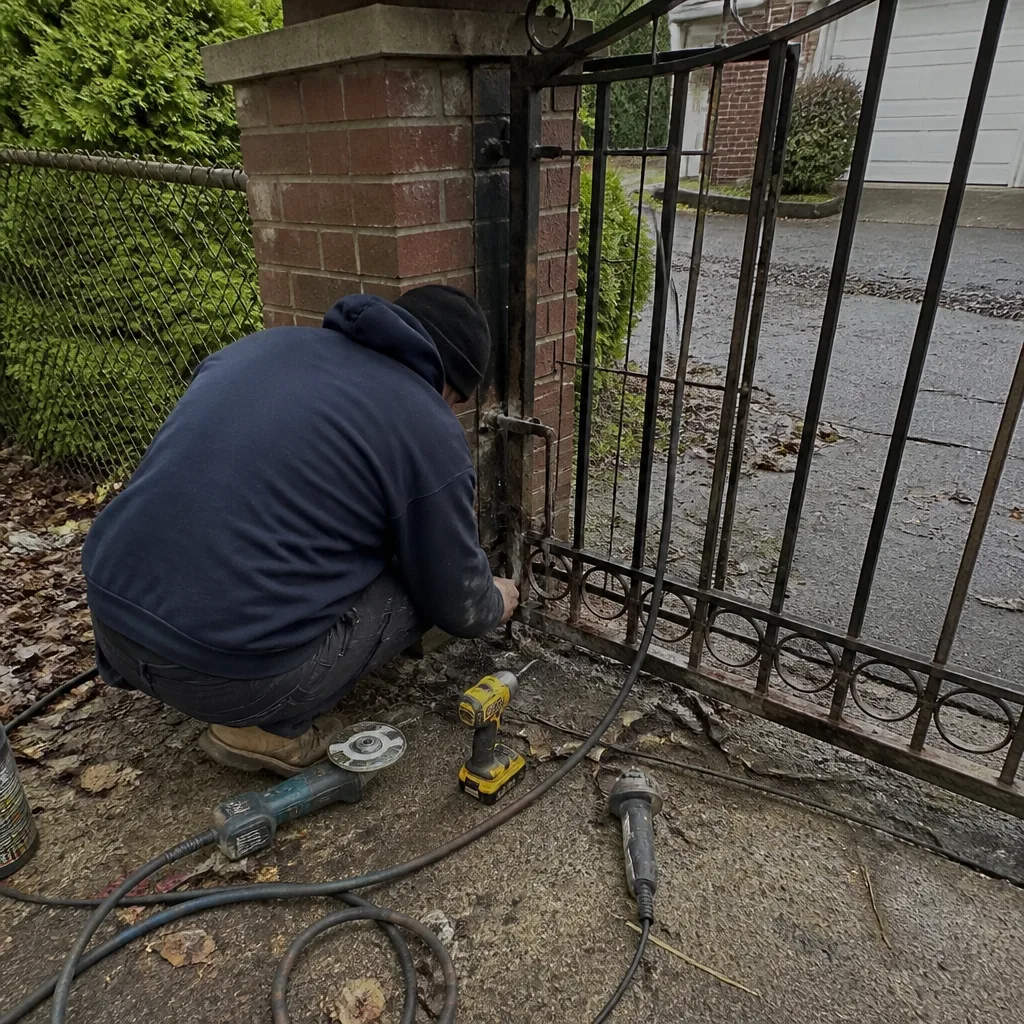 Before
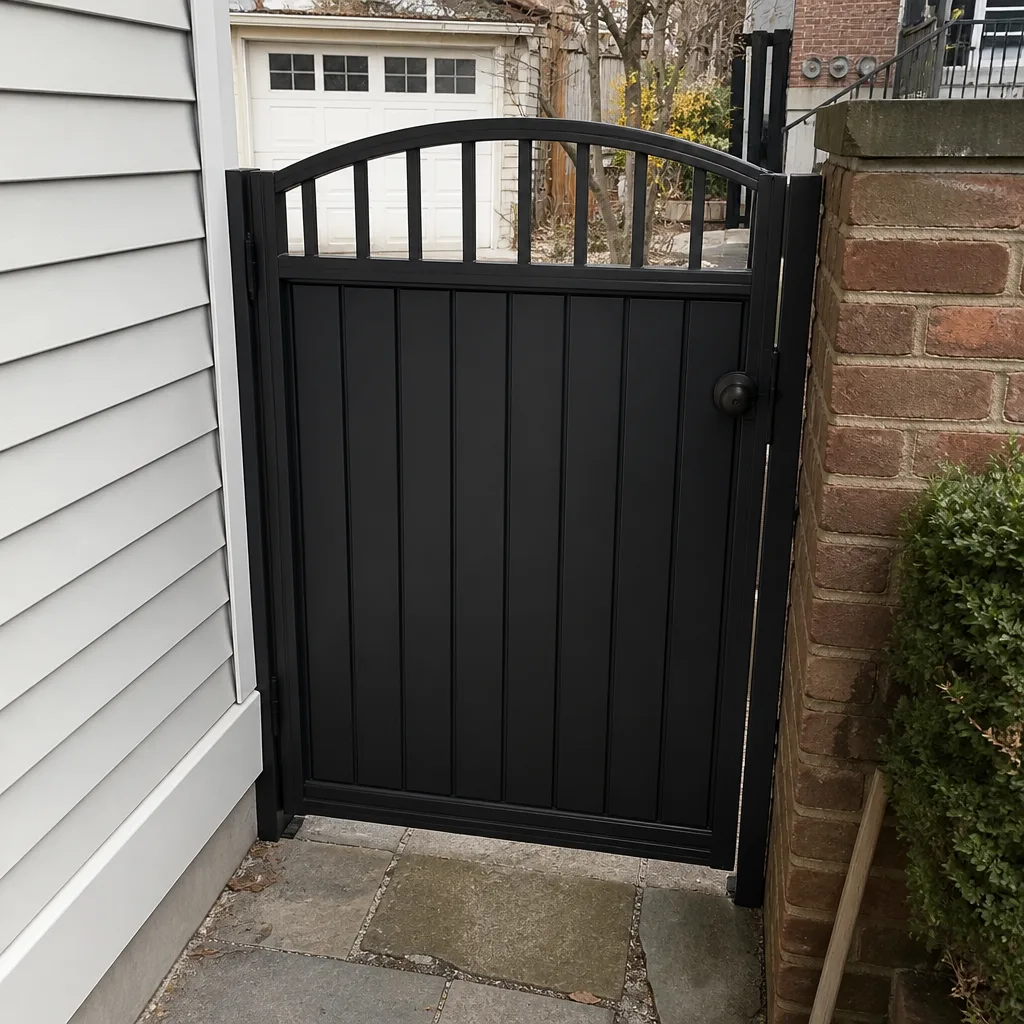 After
After Before
 After
After Before
 After
After