
 Wrought iron
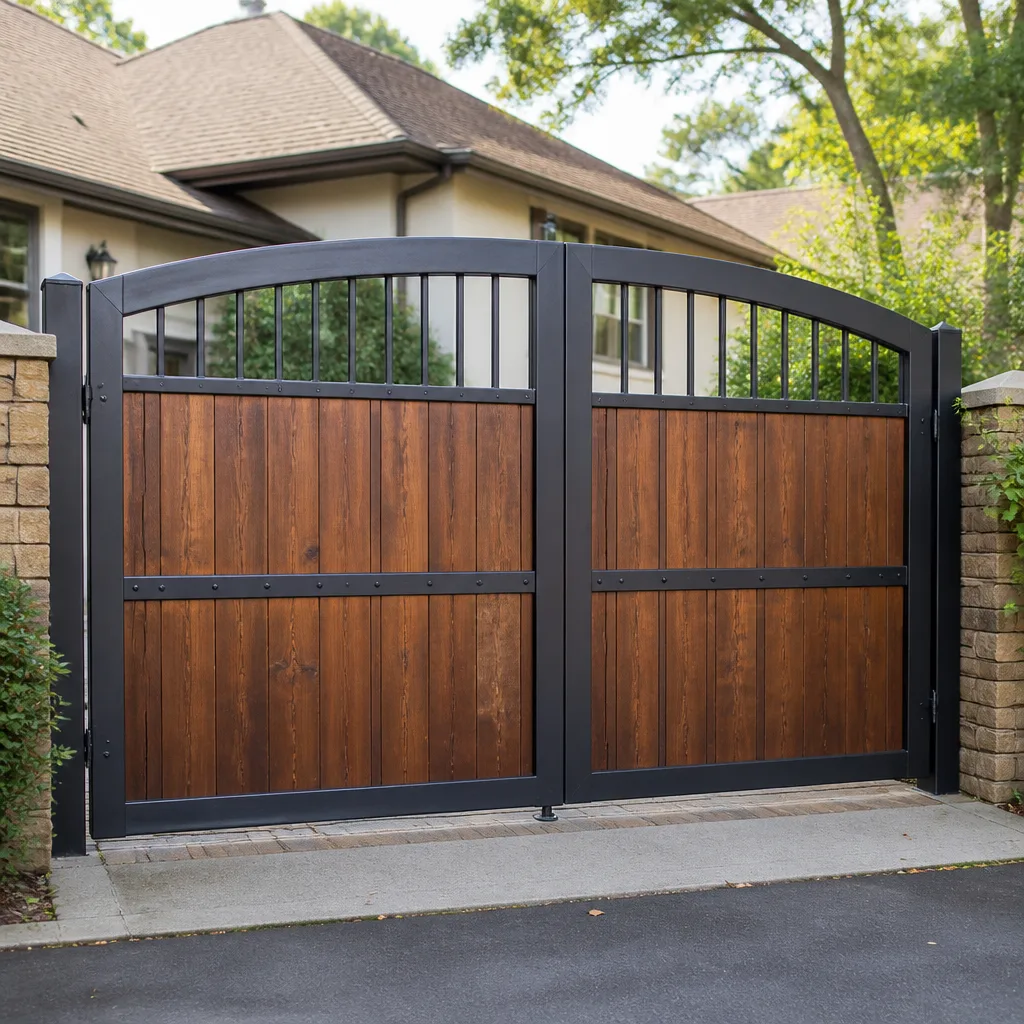 Wood & steel frame
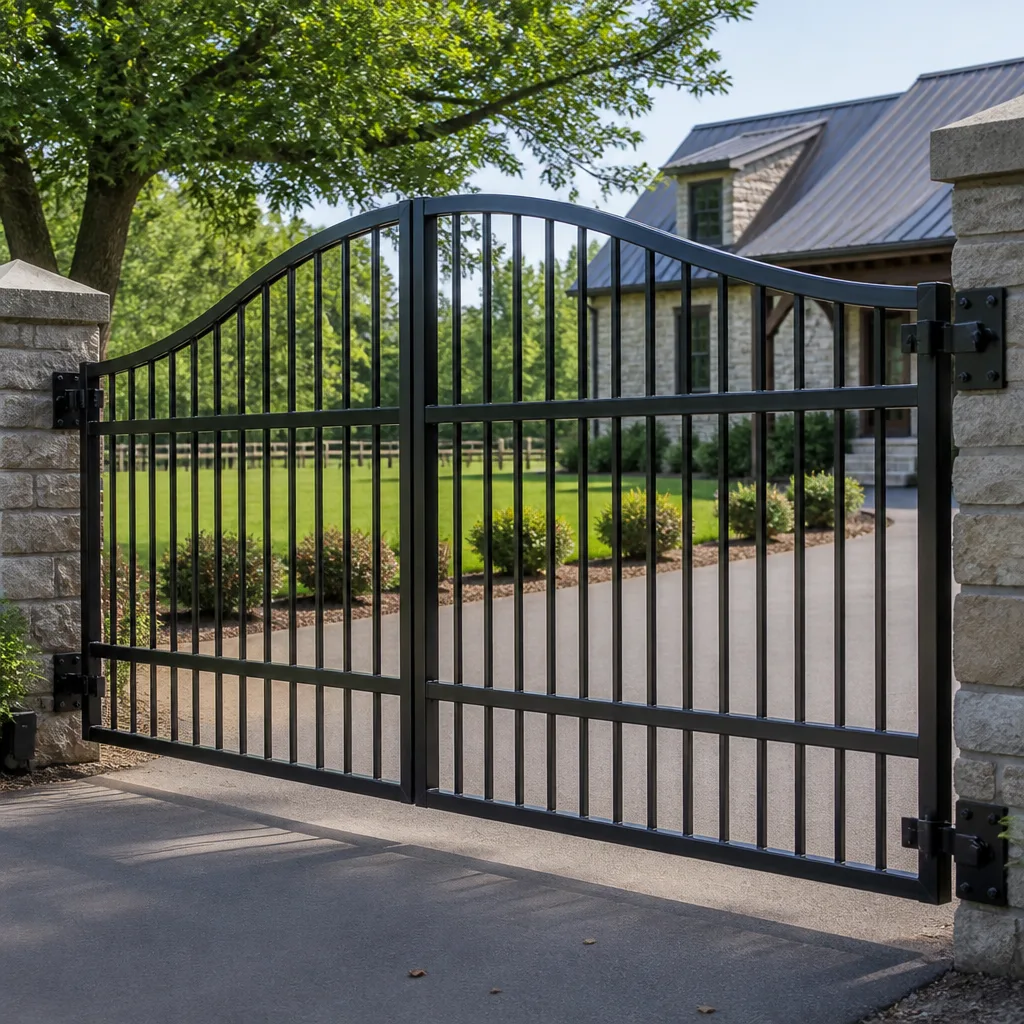 Farm & ranch
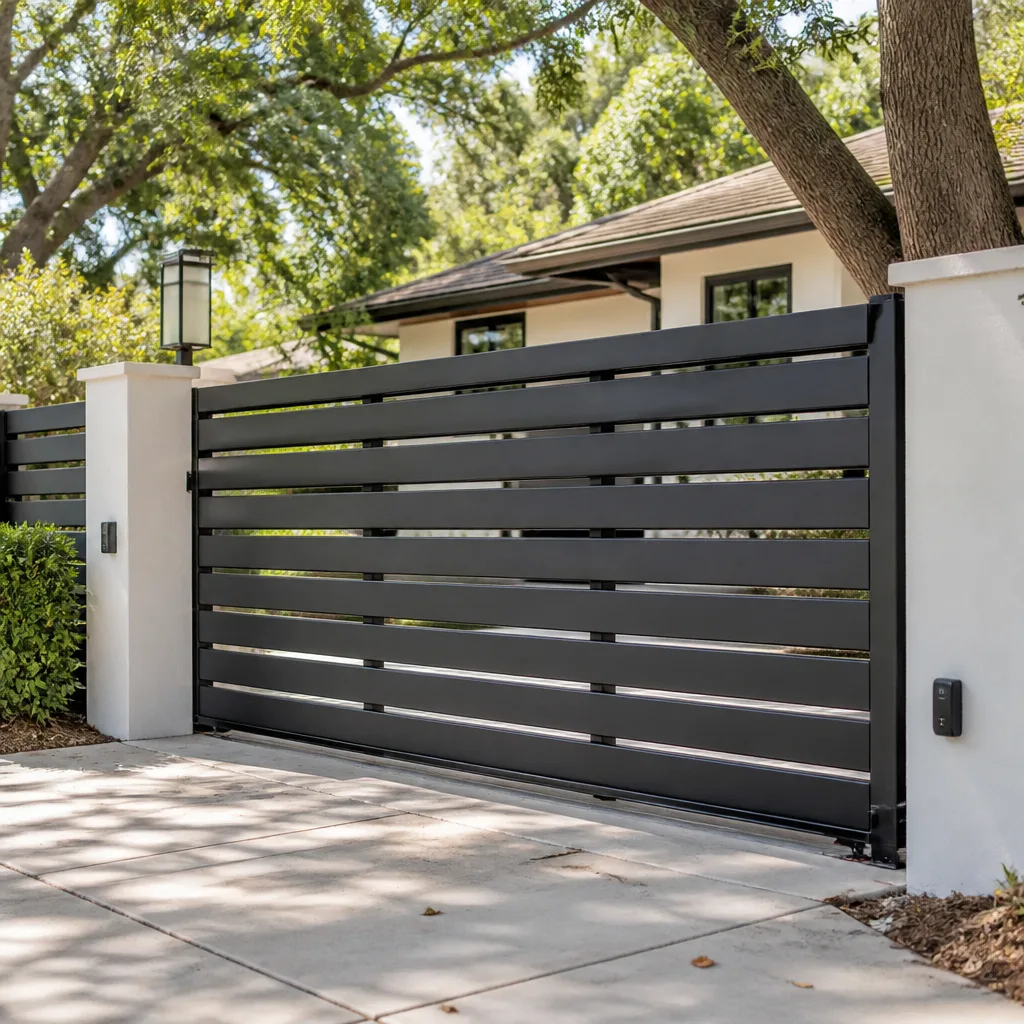 Sliding driveway gates
 LiftMaster operators
Free on-site gate assessment - hinges, posts, and your LiftMaster or Nice gate operator checked before anything is quoted
The assessment is free and the quote is the invoice.
Get your free estimateViking Gate Motor Replacement: The New York Owner’s Guide
Replacing a Viking gate motor in New York typically runs $850 to $1,900 installed, depending on the model series and whether you’re doing a straight motor swap or replacing the full operator assembly. We stock Viking-compatible replacement motors on our trucks for the most common residential swing and slide operators, which means we can usually have your gate running the same day we arrive. Most New York owners figure out something’s wrong the same way: the gate starts moving slower than it did last year, then one morning it grinds for a second and goes dead, or the arm just sits there humming while the gate doesn’t budge.
We’re an independent Kingswell company, not a Viking dealer or affiliate, but our technicians train across nine gate-operator brands and we’ve been working on Viking operators since 2008. What we bring to a Viking motor replacement is simple: we match the motor to your exact model, we give you the price in writing before we unbolt anything, and the whole repair carries our 365-Day Done Right Promise.
Which Viking Models This Applies To
Viking has built a few different motor families over the years, and the right replacement depends on which one you have. The most common residential units we service in New York are the Viking F-1 and G-5 swing gate operators, the R-6 rack-driven slide gate operator, and the H-10 series for heavier residential or light commercial gates. Each uses a motor assembly with different mounting dimensions and torque ratings, so a motor that fits an F-1 will not drop into an H-10 without modification.
The quickest way to identify what you need is to look at the data plate on the side of the operator housing. It’ll list the model number, voltage (Viking makes both 115V and 230V residential units), and often the serial number range. If the plate is painted over or missing, measure the motor body diameter and shaft length, or just send us a photo and we’ll identify it. One New York-specific compatibility gotcha: older Viking units installed before roughly 2010 sometimes have a capacitor-start motor configuration that Viking phased out, so the capacitor’s microfarad rating needs to be checked before a new motor goes in.
On the OEM-versus-aftermarket question: Viking OEM motors are well built and we order them when the job calls for it, but for many F-1 and G-5 units we install a quality aftermarket motor that meets the same torque and duty specs at a meaningfully lower price. We’ll tell you plainly which option makes sense for your gate rather than defaulting to the expensive one.
Styles & brands we work with
Signs Your Viking Gate Motor Is Failing
- The gate moves slower than it used to. A Viking motor losing speed usually means worn brushes or a failing start capacitor. The motor is working harder to produce the same push, and that hard work becomes a failure in weeks, not years.
- Humming but no movement. You hear the motor energize but the gate stays put. This is often a dead capacitor, a seized bearing inside the motor housing, or in some cases a stripped gear coupling between the motor and the drive shaft.
- A burning smell after the gate cycles. That’s insulation breaking down inside the motor windings from heat. It’s the clearest sign the motor is on its way out and should be replaced before it takes the control board along with it.
- The gate stops mid-travel and won’t restart until it cools down. This is thermal overload behavior. The motor’s internal overheat protection is tripping because the windings can’t shed heat fast enough, common with aging motors dragging through the extra resistance of a gate that’s slightly out of level.
- Loud grinding or rattling from the operator housing. Usually the gear reduction stage, not the motor itself, but we’ve seen enough cases where a failing gear load eventually burns out a perfectly good motor. Replacing the motor without checking the drivetrain just means doing the job twice.
See the difference
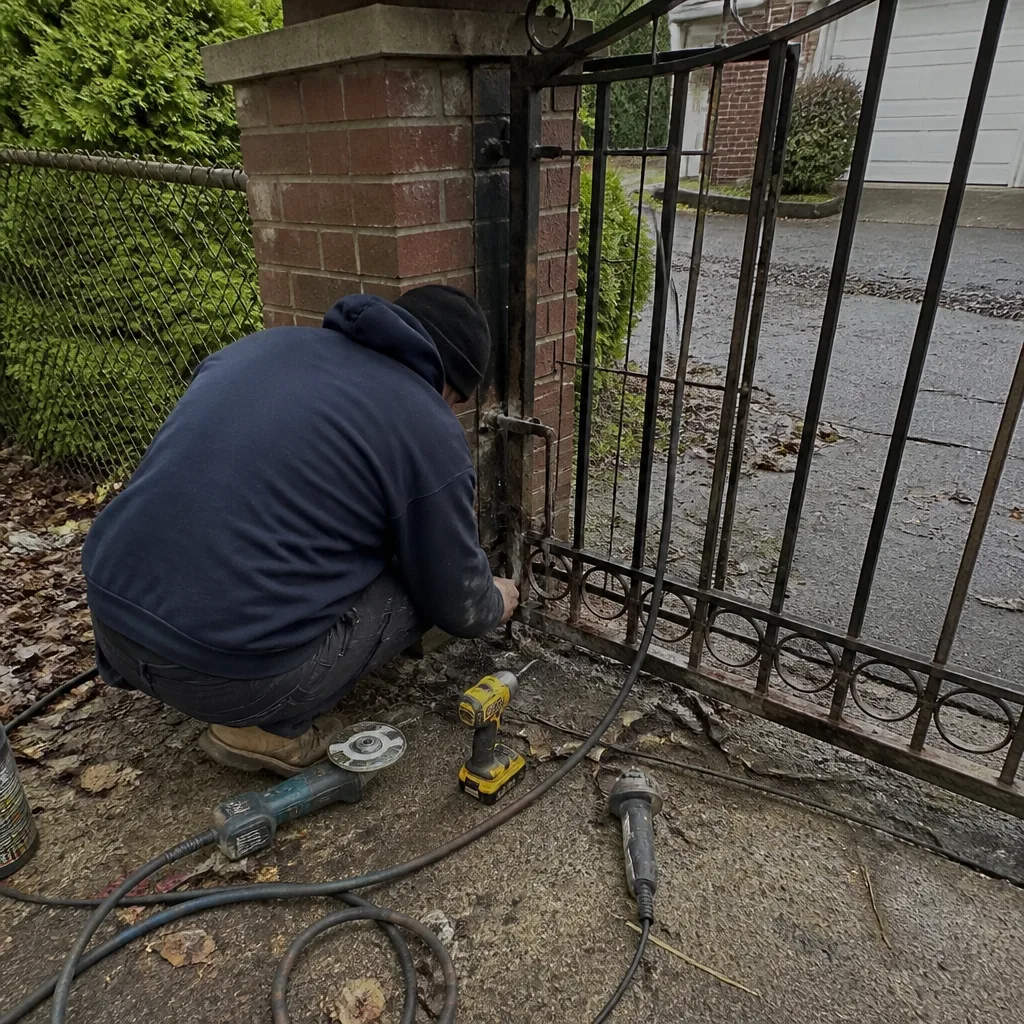 Before
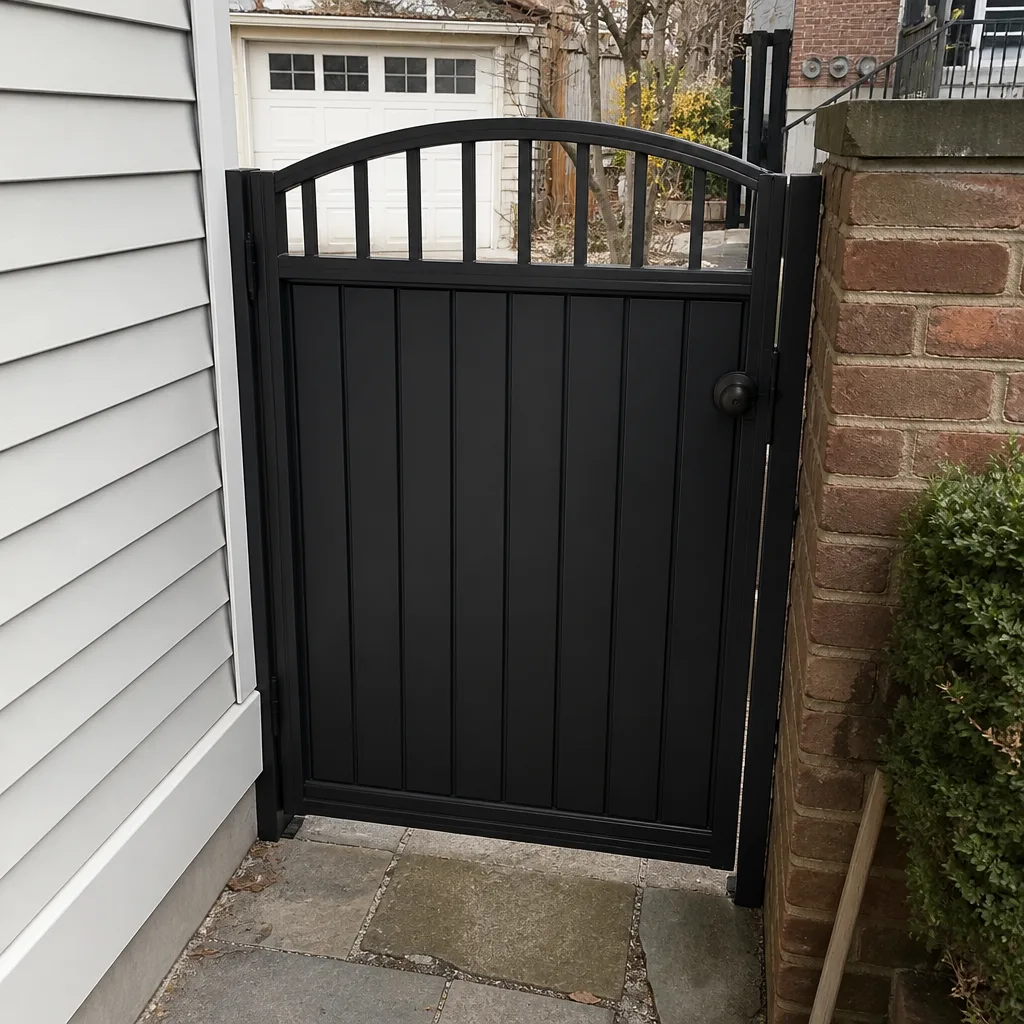 After
After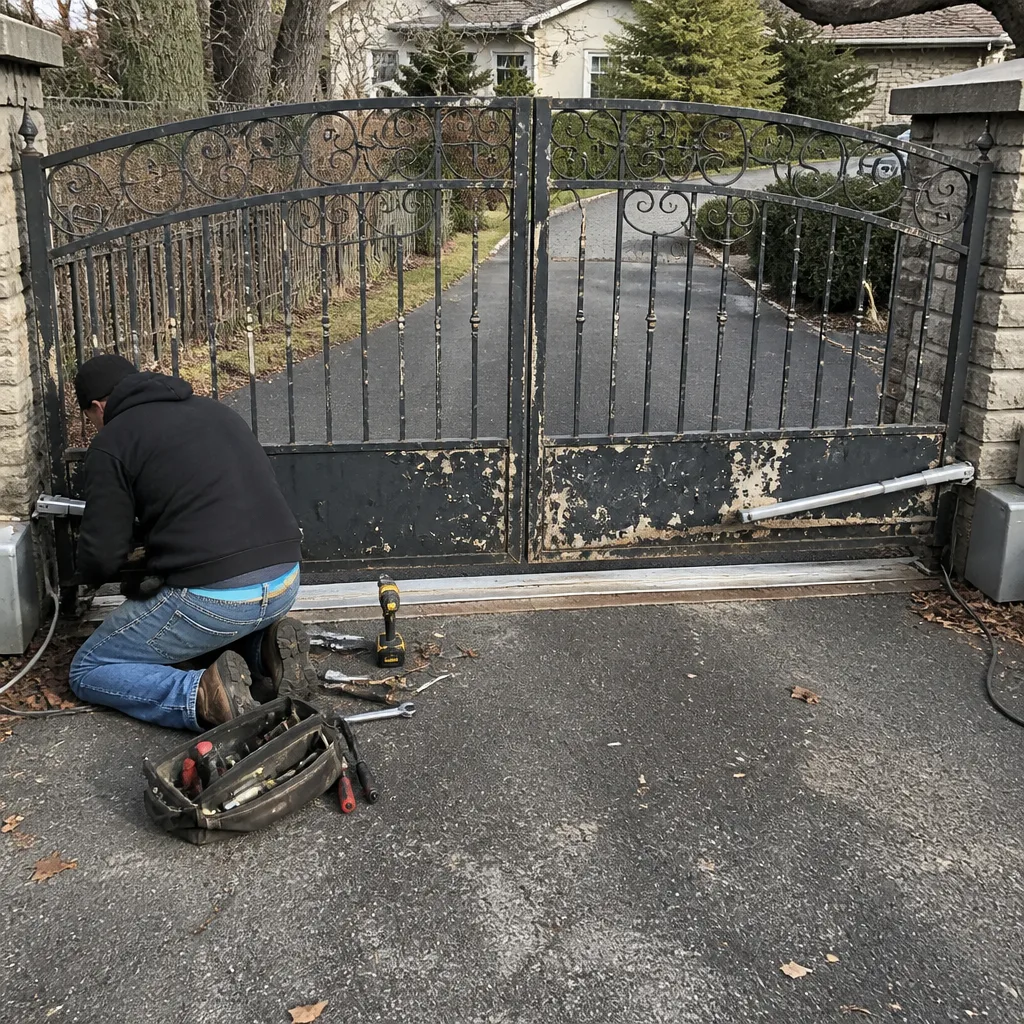 Before
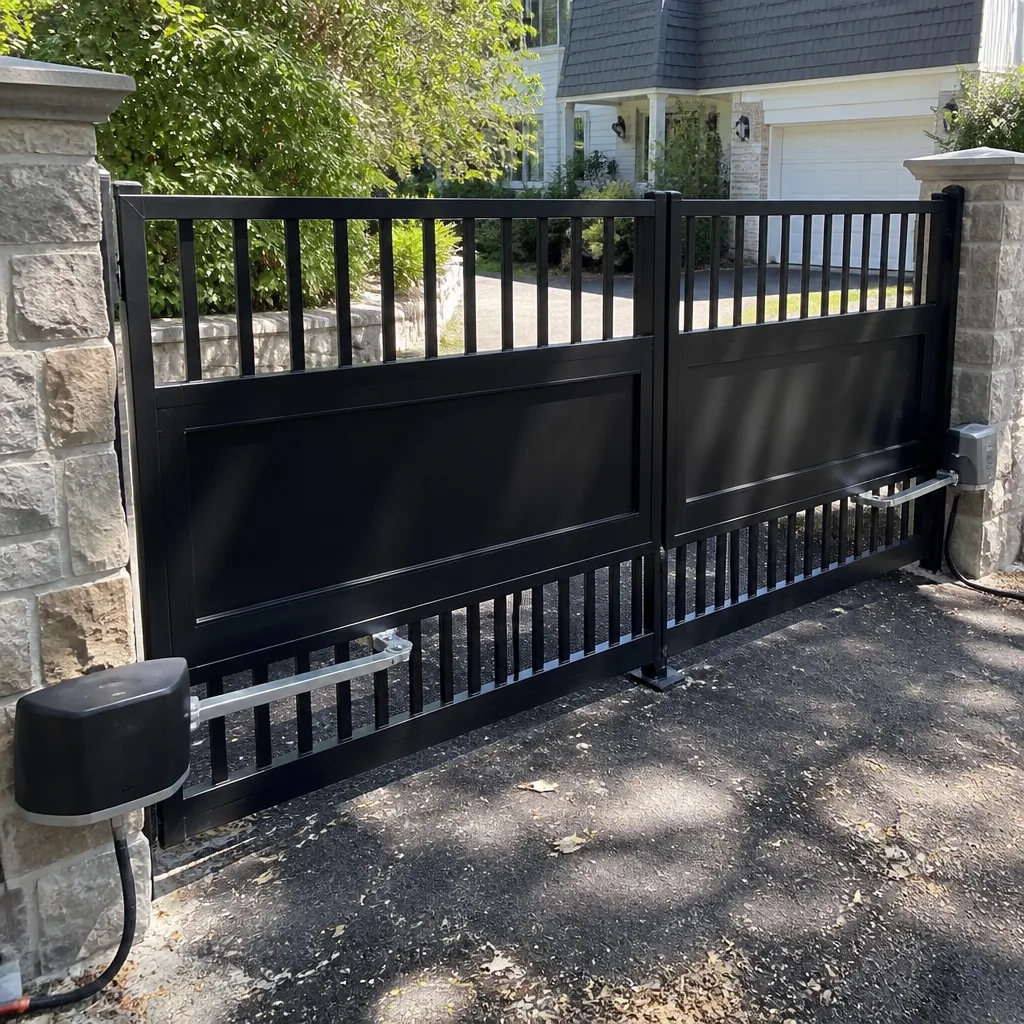 After
After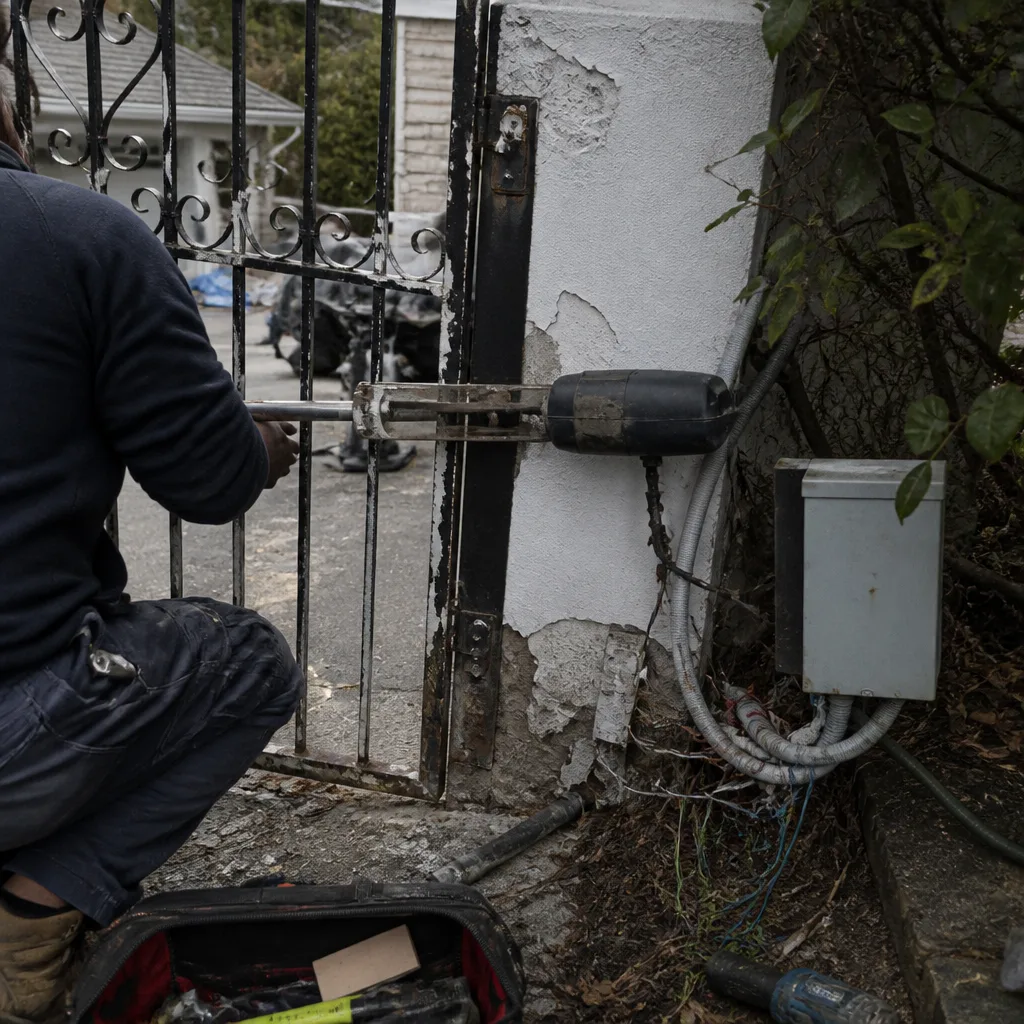 Before
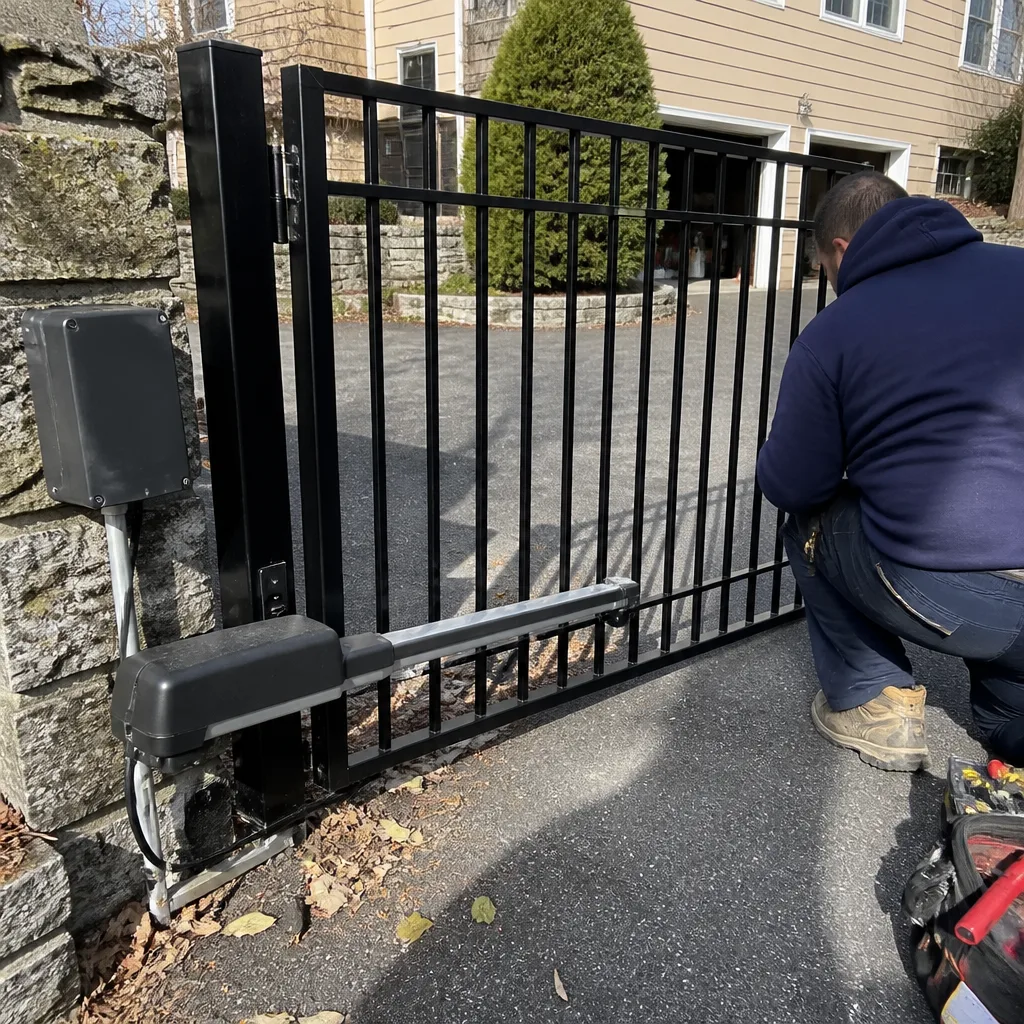 After
AfterReplacement Cost & What’s Included
In New York, a Viking gate motor replacement breaks down like this:
- Straight motor swap on a Viking F-1 or G-5: $850 to $1,150 parts and labor
- R-6 slide operator motor replacement: $950 to $1,300 parts and labor
- H-10 or heavier commercial Viking motor replacement: $1,400 to $1,900 parts and labor
- Full operator assembly replacement (when the motor took out the control board): $1,800 to $2,800 installed
Every quote includes the motor, labor, removal of the old unit, calibration to the gate’s travel limits, and a written Kingswell Guarantee. The price you hear before we start is the price on the invoice when we leave. If an H-10 job turns out to need a new drive chain tensioner, we tell you before touching it, show you the cost, and get your go-ahead. No after-the-fact surprises, ever. And if the repair fails inside 365 days, we come back and make it right at no charge under our 365-Day Done Right Promise.
DIY or Call Us?
Viking gate motors run on line voltage, typically 115V or 230V, and the motor itself often sits in the same enclosure as capacitors that hold a charge even after power is cut. That’s not a warning we print to scare anyone off; it’s a warning we print because we’ve had to fix the results of DIY attempts that went sideways. If you’re comfortable with electrical work and have the manual, you can safely handle the easy parts: checking the breaker, confirming the motor is getting power, and looking for obvious wiring that’s come loose at the terminals.
Beyond that, the motor replacement itself means aligning the shaft to the gear stage, setting limit switches, and re-tuning the control board’s force settings to the new motor’s draw. Get any one of those wrong and the gate can over-travel, slam, or burn through a new motor in six months. We’d rather you call us at (845) 259-0242 and have the job done once, with a written guarantee behind it, than have you spend an afternoon learning why Viking puts those alignment marks where they do.
FAQs
A Viking motor on a properly maintained gate in the New York climate typically lasts 8 to 12 years, though coastal properties with salt air and gates that cycle more than 50 times a day wear through motors faster than that. The most common lifespan killer is a gate that’s misaligned or dragging, which forces the motor to work beyond its rated duty cycle. Tell me what the gate is doing, or not doing, and I’ll give you a real number before we hang up. That offer stands at (845) 259-0242.
In most cases, no. By the time a Viking motor shows burnt windings, worn brushes, or a seized bearing, the cost of rebuilding it exceeds the price of a quality replacement. There are exceptions, like a failed capacitor or loose terminal block, and on those we’ll repair rather than push a new motor. Call us and we’ll diagnose honestly.
A straightforward F-1 or G-5 motor swap takes about 1.5 to 2 hours from start to calibrated finish. An R-6 or H-10 replacement with limit resetting typically runs 2 to 3 hours, and a full operator replacement can take half a day if we’re rewiring the control board. We’ll tell you the window before we arrive, and our technicians show up in that window.
We stock replacement motors and capacitors for the most common Viking swing and slide operators on our trucks, and for less common models we order same-day from our New York parts suppliers. Either way, the price is written down before we start, so there’s no mystery when the motor arrives. We also keep parts for LiftMaster, Mighty Mule, and Ghost Controls operators for multi-gate properties.
Written by Dean Prescott, Owner, Portcullis Gate Repair New York at Portcullis Gate Repair New York, serving New York and nearby areas.